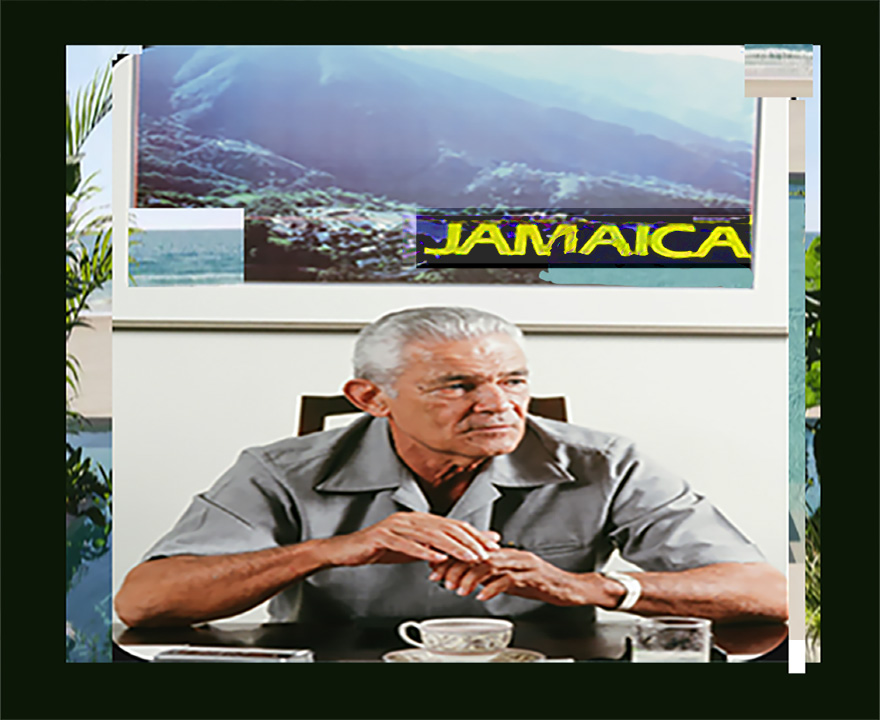
Prime Minister Andrew Holness’s rhetoric surrounding the 1970s administration of Michael Manley relies on a convenient strategy: judging a transformative era of social empowerment purely through a modern macroeconomic lens. Facing public scrutiny over his own administration’s decade-long record, Holness’s political commentary frequently cherry-picks fiscal contraction metrics while framing democratic socialism as an “ideological misadventure” that ruined Jamaica’s growth trajectory.
What this revisionist narrative conveniently erases is the fundamental issue of national sovereignty—the decision of a sovereign nation to walk on its feet rather than crawl on its knees before foreign powers—and the deliberate political warfare launched to break that resolve.
The Omission of Seaga and CIA Destabilization
The core flaw in the Prime Minister’s critique is its deliberate silence on the external and internal sabotage that engineered the crises of the 1970s. Holness lays economic instability squarely at Manley’s feet without acknowledging the aggressive destabilization campaign led by his own political mentor, Edward Seaga, operating in close alignment with U.S. intelligence agencies.
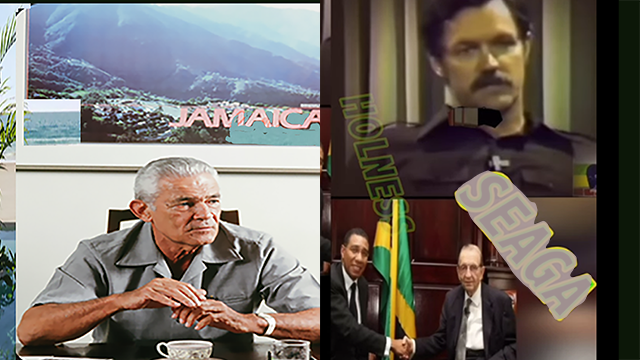
The economic stress, food shortages, and unprecedented political violence of that era were not inherent failures of social policy; they were the direct toll of Cold War intervention. Declassified documents and whistleblower testimonies from former CIA officers, including John Stockwell and Philip Agee, exposed the foreign destabilization playbooks used throughout the region:
- Economic Asphyxiation: Weaponized credit freezes, foreign capital strikes, and coordinated international trade blockades designed to strangle the Jamaican economy.
- Orchestrated Violence: The mass importation of high-powered firearms into volatile urban constituencies, turning local neighborhoods into ideological battlegrounds to force regime change.
Attributing these orchestrated crises strictly to “PNP mismanagement” ignores the historical reality of political warfare waged against a government that dared to stand up for its own people.


The Bauxite Strategy and Economic Sovereignty
At the heart of Manley’s agenda was a refusal to capitulate to imperialist extraction. When the PNP administration introduced the Bauxite Production Levy in 1974, it was a bold assertion of national ownership.
Up to that point, North American multinationals (such as Alcoa, Alcan, and Reynolds) exported raw bauxite out of Jamaica for pennies on the dollar. They refined the resource off-island, leaving Jamaicans with environmental degradation, minimal tax revenue, and zero industrial integration.
- Revenue Realignment: The 1974 Levy tied tax rates directly to the realized market price of primary aluminum internationally. State bauxite revenue surged from under J$25 million to over J$180 million almost overnight, supplying the funds needed for public education, healthcare, and infrastructure.
- Domestic Processing Vision: Manley insisted on developing domestic alumina refining and acquiring local equity in mining operations, ensuring value-added wealth remained within Jamaica rather than being siphoned overseas.
- Capital Backlash: Foreign bauxite companies retaliated immediately by scaling down production, transferring capital offshore, and pressing Washington to apply diplomatic and economic leverage against Kingston.
Social Reforms vs. Neoliberal Metrics
The irony of modern criticism remains clear: a vast majority of modern Jamaicans—including current political leaders—continue to stand on the foundational social mobility established by Manley’s vision.
Institutional Human Rights
Manley gave the black working class a profound sense of dignity and “being somebody.” His administration dismantled centuries of colonial oppression through structural policy:
- Class Mobility & Rights: Free secondary and tertiary education, the Minimum Wage Act, paid maternity leave, and the Status of Children Act (which ended the legal stigmatization of children born out of wedlock).
- Worker Dignity: Land lease initiatives, worker-owned cooperatives, and expanded trade union rights gave ordinary citizens political agency and economic equity.
The True Price of Independence
Evaluating the 1970s solely through present-day fiscal metrics divorced from Cold War realities provides a clean narrative for contemporary policy, but it erases the moral authority of Jamaica’s struggle for self-determination.
Michael Manley’s era was defined by a refusal to sacrifice national dignity for international compliance. The violence and economic hardship of that decade were the price paid for challenging foreign dominance—a historical truth that no amount of modern revisionism can rewrite.
Related Posts
-
The criticism is misplaced. The…
-

!function(r,u,m,b,l,e){r._Rumble=b,r[b]||(r[b]=function(){(r[b]._=r[b]._||[]).push(arguments);if(r[b]._.length==1){l=u.createElement(m),e=u.getElementsByTagName(m)[0],l.async=1,l.src="https://rumble.com/embedJS/uq41bt"+(arguments[1].video?'.'+arguments[1].video:'')+"/?url="+encodeURIComponent(location.href)+"&args="+encodeURIComponent(JSON.stringify([].slice.apply(arguments))),e.parentNode.insertBefore(l,e)}})}(window, document, "script", "Rumble"); Rumble("play",…
-

Contradicting U.S. intelligence that finds…
-

As European festivals like Reggae…


https://phillyyardyvibes.com/holness-revisionism-michael-manley-sovereignty-bauxite/