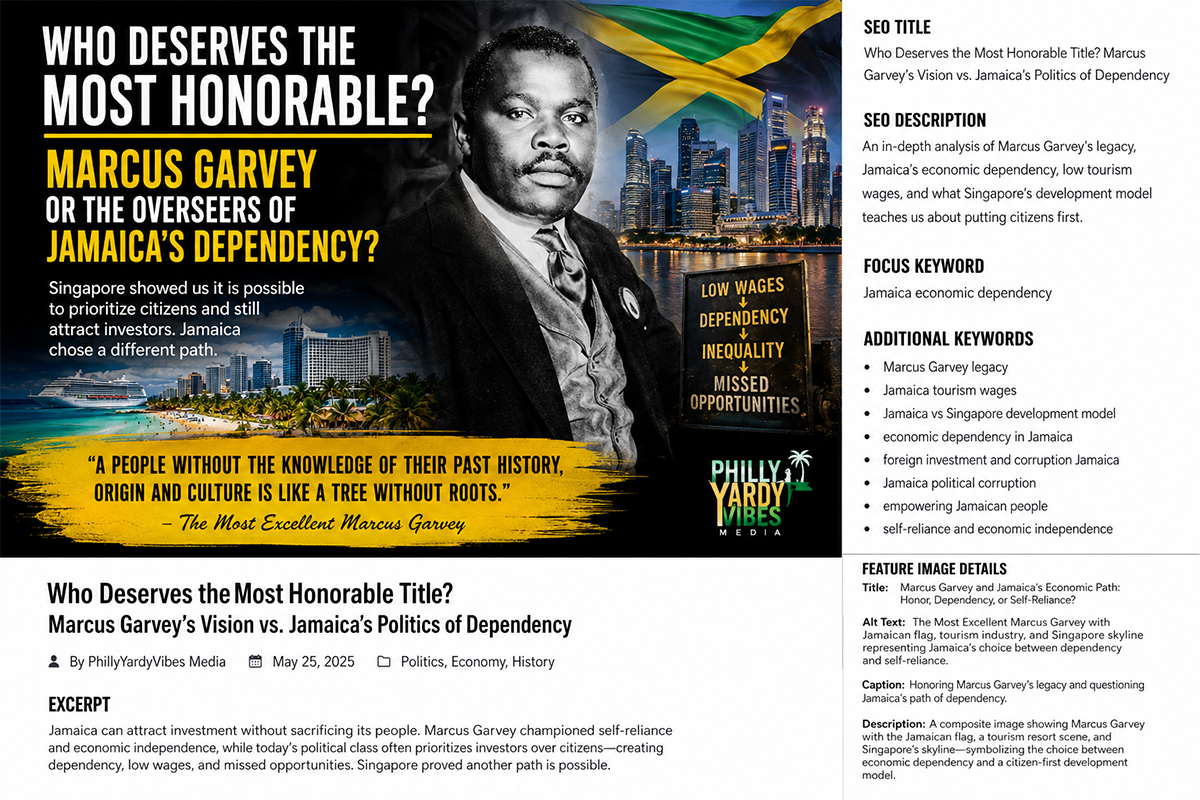
The titles we give our leaders—and the values we should actually honor
In Jamaica, titles carry considerable weight.
We routinely hear public officials referred to as “The Most Honourable” or “The Honourable,” particularly in political and media coverage. These titles are part of Jamaica’s formal system of national honours and constitutional tradition.
But there is another question worth asking:
Does the title “honourable” automatically make a person honourable?
Or should honour ultimately be measured by something much more meaningful—what a leader does for the people they govern?
That question becomes particularly relevant when we compare Jamaica’s present economic model with the philosophy of Jamaica’s first National Hero, The Right Excellent Marcus Mosiah Garvey.
Garvey’s official national designation is “The Right Excellent,” reflecting his status as a recipient of Jamaica’s highest national honour, the Order of National Hero. He was Jamaica’s first National Hero and was formally conferred with the honour in 1969.
Garvey’s philosophy emphasized self-reliance, organization, economic empowerment and the belief that Black people needed greater control over their own economic and political destiny. Jamaica’s own historical record describes his philosophy in terms of self-reliance and the need for rulers to govern on behalf of working people.
That raises a provocative question for modern Jamaica:
If Marcus Garvey were looking at Jamaica’s economic structure today, would he consider the country genuinely independent—or simply politically independent while remaining economically dependent?
Political independence does not automatically create economic independence
Jamaica became politically independent in 1962.
But political independence was only one step.
A nation can have its own flag, government, Parliament, and national anthem while still operating within an economic structure heavily influenced by external capital, foreign corporations, and international markets.
There is nothing inherently wrong with foreign investment.
In fact, foreign investment can be extremely valuable.
The real question is how a country structures that investment and who ultimately benefits from it.
Does foreign capital help build local companies, develop Jamaican workers, transfer technology, expand domestic ownership and create high-value industries?
Or does it primarily create an economy in which Jamaica provides the land, labour, natural beauty and consumer market while a disproportionate share of the wealth and decision-making power remains elsewhere?
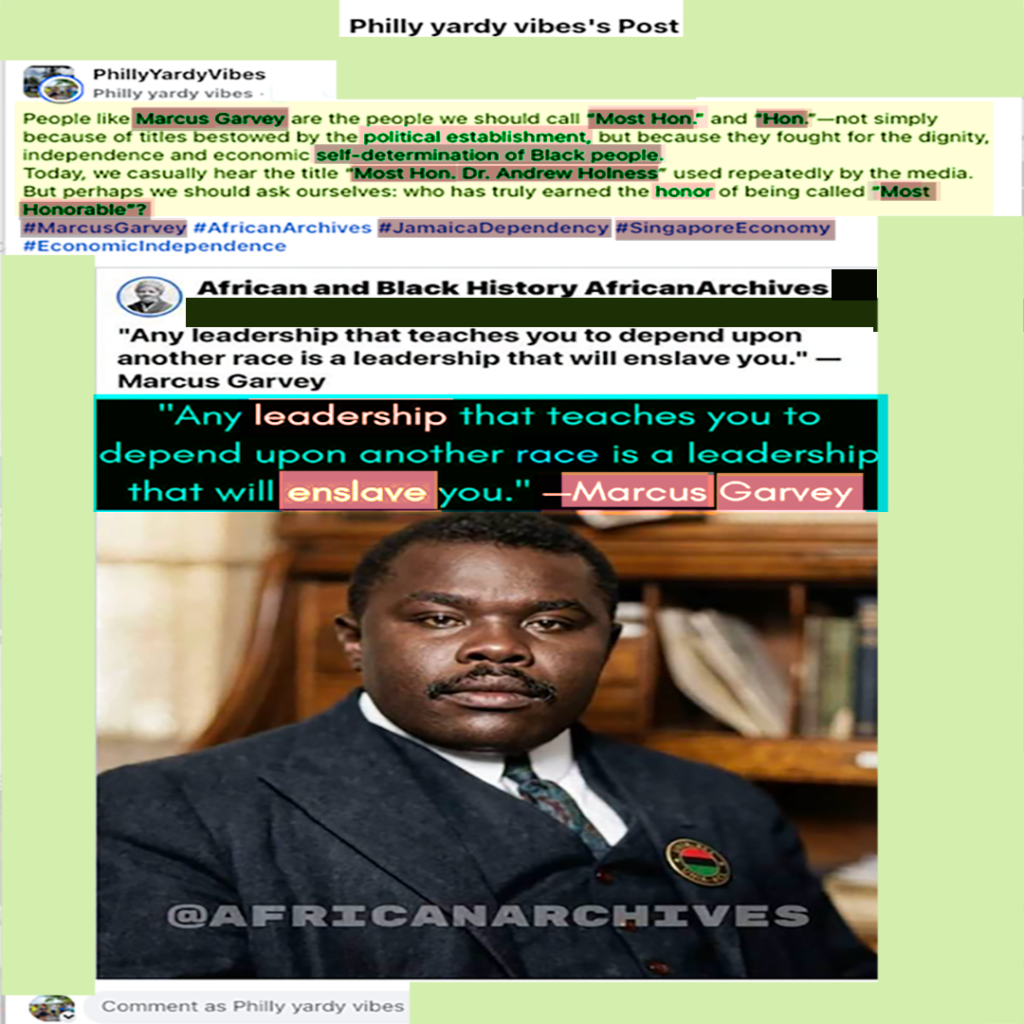
That distinction is at the heart of the dependency argument.
Investors are important—but citizens should come first
There is a tendency in developing countries to treat attracting investors as an economic objective in itself.
Governments compete for investment.
They offer incentives.
They provide concessions.
They market land and natural resources.
They celebrate new hotels, new developments and new projects as evidence of economic progress.
But investment should not be the final objective.
Investment is a tool.
The objective should be improving the economic position of the people.
A successful investment should therefore be judged by more than how much money the investor puts into the country.
We should also ask:
- How many quality jobs does it create?
- How much do those workers earn?
- How much of the supply chain remains locally owned?
- Are Jamaican businesses able to grow alongside the investment?
- Are workers receiving meaningful training and opportunities for advancement?
- Is technology and knowledge being transferred?
- Does the investment strengthen Jamaica’s productive capacity?
- Does the community become wealthier and more economically independent?
These are much harder questions than simply announcing the value of a development project.
Singapore provides an important comparison
Singapore offers an interesting counterexample to the argument that a country must put investors first in order to attract investment.
Singapore has aggressively pursued foreign direct investment. It remains one of the world’s major investment destinations and has built a highly diversified economy around manufacturing, finance, technology, logistics, services and other high-value sectors. Singapore’s Economic Development Board itself emphasizes the country’s strong FDI flows, diversified economy, talent pool and institutional stability.
But Singapore’s approach has also focused heavily on ensuring that investment contributes to the capabilities of its own workforce and businesses.
Singapore’s Economic Development Board says it works to ensure foreign investments benefit the local workforce and business ecosystem. Its programmes include training workers, developing Singaporean corporate leaders and connecting multinational corporations with local enterprises.
That is an important distinction.
The question is not:
“Foreign investment or Jamaican citizens?”
The better question is:
“How do we attract foreign investment while making Jamaican citizens stronger because of it?”
That is a very different development philosophy.
Singapore’s experience demonstrates that a country can actively court international capital while simultaneously building domestic human capital, local enterprises and high-value employment.
Indeed, Singapore’s own investment data show that foreign-owned companies play a major role in employing residents in high-earning positions.
The lesson for Jamaica is not to copy Singapore mechanically. Jamaica and Singapore have very different histories, geography, populations and economic structures.
The lesson is more fundamental:
Foreign investors do not have to be placed above citizens for investment to occur.
Jamaica’s tourism model deserves greater scrutiny
This is where the conversation becomes particularly important for Jamaica.
Tourism is one of the country’s most important economic industries. Jamaica has built an internationally recognized tourism brand around its beaches, music, culture, food, hospitality and natural environment.
But tourism numbers alone do not tell us whether tourism is producing broad-based prosperity.
A country can welcome millions of visitors and still have communities where workers struggle to afford housing, transportation, food and other necessities.
That is why the quality of tourism employment matters just as much as the number of tourists arriving.
Historical World Bank comparative data on tourism-company wages in several Caribbean countries showed significant differences by occupation and country, illustrating why the distribution of tourism income deserves examination rather than assuming that tourism growth automatically translates into high household incomes.
The bigger structural concern is what happens when tourism becomes the dominant employer in a community.
If workers have few alternative industries available, their bargaining power can weaken.
If agriculture declines, manufacturing remains limited, and high-value technology industries fail to develop, tourism workers may have very few alternatives when wages are low.
This creates a cycle:
Limited economic diversification → dependence on tourism → limited worker bargaining power → pressure to accept low-paying jobs → continued dependence on tourism.
That is dependency at the local level.
The problem is not the hotel—it is the economic structure
It is important to make this distinction.
The argument should not be that hotels are bad.
The argument should not be that foreign investors are bad.
The argument is that a country should not build an economic structure in which investors have far more alternatives than the workers and communities hosting their businesses.
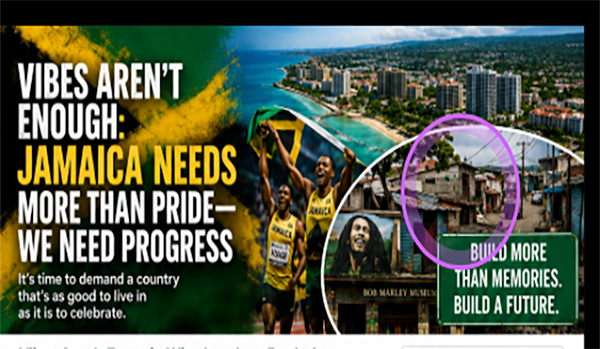


A healthy economy gives people choices.
A Jamaican worker should ideally be able to choose between tourism, manufacturing, agriculture, technology, logistics, education, healthcare, entrepreneurship and other productive sectors.
When those alternatives exist, employers must compete for workers.
That competition can improve wages, working conditions and career opportunities.
But when an entire region becomes dependent on one dominant industry, the economic relationship changes.
The employer has options.
The worker may not.
The uncomfortable question of political incentives
This is also where the discussion about corruption and political influence enters.
It is important not to make unsupported claims that individual investors or politicians are secretly exchanging money or favours.
Those are serious allegations that require evidence.
But it is entirely legitimate to examine the structural incentives created when governments become highly dependent on attracting large investors.
Whenever governments negotiate major developments, concessions, tax arrangements, land use and regulatory treatment, there is a natural need for transparency.
The public should be able to ask:
What did Jamaica give up to secure the investment, and what did Jamaica receive in return?
If an investor receives substantial incentives, the public should know what measurable benefits are expected.
If public land is involved, citizens should understand the terms.
If a development receives concessions, the country should be able to demonstrate why those concessions serve the broader public interest.
And if political decisions repeatedly favour large investors while ordinary citizens remain economically marginalized, people have every right to question the model.
This is not an accusation of corruption.
It is an argument for accountability and transparency.
When citizens are prioritized, development looks different
A citizen-first development model does not mean rejecting capitalism.
It does not mean closing Jamaica to foreign investment.
It does not mean government controlling every business.
It means establishing clear rules:
Investors are welcome—but investment must contribute to national development.
That could mean stronger requirements for local procurement.
It could mean greater investment in worker training.
It could mean incentives tied to wages, productivity, and career advancement.
It could mean stronger partnerships between foreign companies and Jamaican-owned businesses.
It could mean requiring major developments to demonstrate measurable local economic benefits.
And above all, it means building an economy in which Jamaicans are not merely employees within someone else’s economic system, but increasingly become owners, entrepreneurs, professionals, investors and decision-makers.
That is much closer to the spirit of economic self-reliance that Garvey promoted.
What would Marcus Garvey think of Jamaica today?
We cannot know exactly what Garvey would say about today’s Jamaica.
But we can look at what he actually stood for.
Jamaica’s historical record describes Garvey’s philosophy as emphasizing self-reliance, organization, economic empowerment and governance that served working people.
That makes his ideas surprisingly relevant to a modern debate about economic development.
Garvey understood that freedom had an economic dimension.
A person who technically has political freedom but possesses no economic power remains vulnerable.
The same principle can apply to nations.
A country can have political independence while remaining economically vulnerable if it lacks diversified industries, strong domestic ownership, high-value employment and the ability to negotiate confidently with external capital.
That is why the question of who benefits matters so much.
Who deserves the title “Most Honourable”?
This brings us back to the title.
Jamaica’s formal system distinguishes between its various national honours. The Order of the Nation is associated with the style “The Most Honourable,” while recipients of the Order of National Hero are styled “The Right Excellent.”
These are legitimate constitutional and national distinctions.
But there is also a deeper, moral meaning to the word honourable.
A title can be formally bestowed.
Respect must be earned.
That is why Marcus Garvey’s legacy remains so powerful.
He did not become important because somebody placed an honorific before his name.
He became important because he challenged an economic and political order that he believed denied Black people control over their own destiny.
And Jamaica eventually recognized that contribution by making him its first National Hero.
So perhaps the question we should ask today is not simply:
Who carries the title?
It is:
Who is actually advancing the interests of the Jamaican people?
Who is building an economy where citizens have choices?
Who is creating opportunities for Jamaican ownership?
Who is ensuring that investment produces good jobs rather than simply more jobs?
Who is strengthening local businesses?
Who is investing in education, skills and innovation?
Who is reducing dependency rather than managing it?
Those are the questions that should define leadership.
Jamaica does not need less investment—it needs better investment
The solution is not to chase away investors.
Jamaica needs capital.
Jamaica needs businesses.
Jamaica needs tourism.
Jamaica needs international partnerships.
But Jamaica also needs to stop measuring economic success primarily by how attractive it is to outsiders.
The ultimate measure should be how much economic power is being created inside Jamaica and among Jamaicans.
Singapore’s experience demonstrates that international investment can be incorporated into a national development strategy that also strengthens local capabilities and employment.
Garvey’s legacy provides the philosophical challenge:
Build the capacity of the people.
Those two ideas are not contradictory.
In fact, they may be complementary.
Attract investment.
But negotiate from strength.
Welcome investors.
But protect the public interest.
Build hotels.
But build Jamaican businesses around them.
Create jobs.
But create careers.
Grow tourism.
But diversify the economy.
Invite foreign capital.
But build domestic capital too.
That is how investment can become a pathway out of dependency rather than another mechanism for perpetuating it.
The real meaning of independence
More than six decades after political independence, Jamaica’s most important economic question may not be whether the country is attracting enough investors.
It may be whether Jamaicans are becoming sufficiently powerful participants in the economy they live in.
That is the unfinished part of independence.
And perhaps that is where Marcus Garvey’s message remains most relevant.
The goal should never be to create an economy that exists primarily to make Jamaica attractive to investors.
The goal should be to create an economy that makes Jamaica prosperous for Jamaicans—while giving investors a compelling reason to participate in that prosperity.
That is a very different vision.
And it leads back to the question that started this conversation:
Who truly deserves to be called honourable?
Perhaps the answer should not be determined by the title before a person’s name.
Perhaps it should be determined by the people whose lives are better because that person served.
Political independence gave Jamaica the right to govern itself.
Economic independence requires Jamaica to build the power to provide for itself.
And that is a conversation Marcus Garvey started more than a century ago that Jamaica has not finished.




come and join me at moomoo!Sign up via my referral link now and claim 8.1% APY and up to 15 free stocks!
account when you invite 3 or more friends to sign