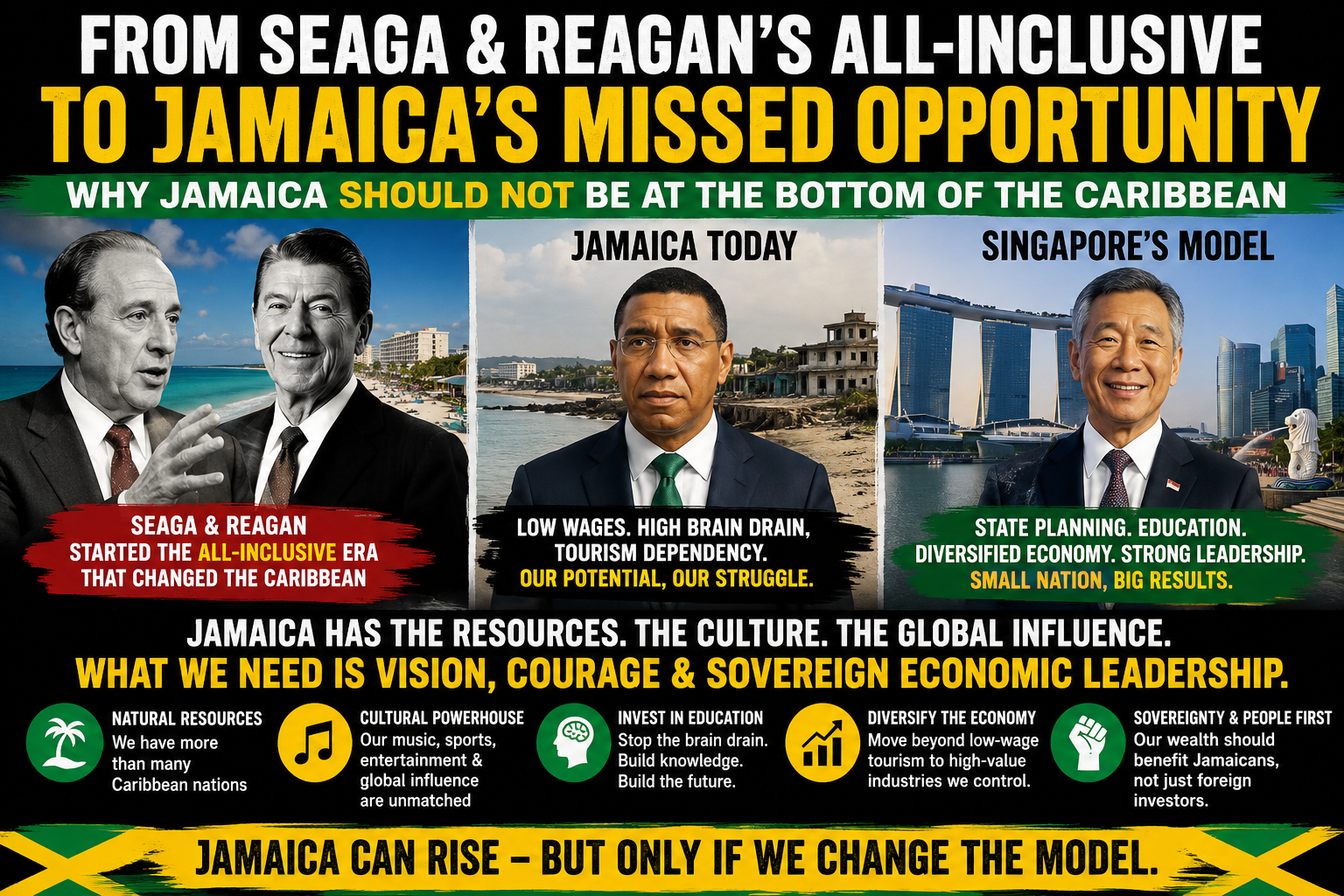
Before criticizing socialism or communism, people should first understand what those terms actually mean instead of repeating decades of Cold War propaganda. Western societies have conditioned people to fear these ideologies while often ignoring how much the United States, Canada, and Europe themselves depend on state intervention, public subsidies, social welfare systems, and government-funded infrastructure to sustain their economies.
The reality is that capitalism in the Global South has often functioned less as a “free market” and more as a form of neocolonialism. Developing nations are routinely told not to nationalize resources, protect local industries, or subsidize strategic sectors—not because it harms them, but because Western corporations benefit from continued access to cheap raw materials, low wages, and dependent economies. Whenever countries attempt to assert sovereign control over their economies, they frequently face sanctions, blockades, political destabilization, or external pressure, as seen with countries like Cuba.
And this is exactly why Jamaica should not be at the bottom of the barrel economically in the Caribbean. Jamaica possesses far more natural resources, global cultural influence, and international brand recognition than many smaller nations. Yet despite producing world-renowned music, athletics, cuisine, and entertainment culture, the country still struggles with some of the lowest wages and one of the highest levels of brain drain in the region. That should be a major warning sign that the current economic model is not delivering broad prosperity for ordinary Jamaicans.
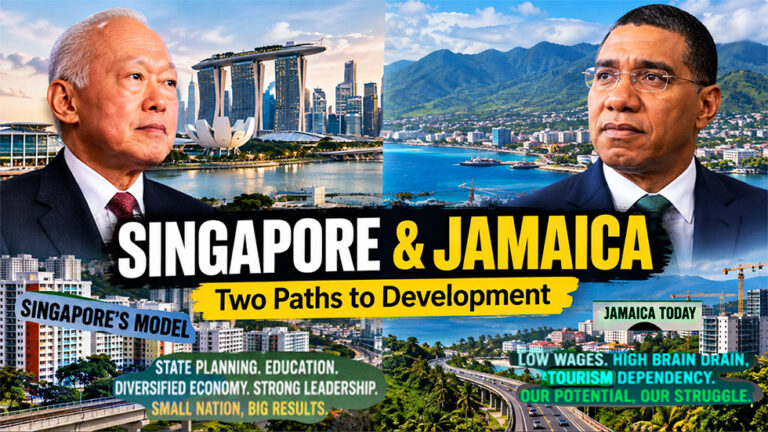
Compare that to Singapore, a country with almost no natural resources, which transformed itself through aggressive investment in education, state planning, infrastructure, industrial policy, and strategic tourism development. Singapore understood that tourism alone could not sustain a strong economy; it built finance, technology, logistics, manufacturing, and human capital alongside it.
Meanwhile, Jamaica’s tourism model often resembles a modern extension of the old plantation system: foreign investors dominate ownership, profits leave the island, local industries receive limited state protection, and workers remain trapped in low-paying service jobs. Even smaller Caribbean nations like Barbados and Saint Vincent and the Grenadines have, in some respects, managed to create stronger social outcomes relative to their size and resources.



Jamaica’s cultural influence alone should be powerful enough to help propel a far stronger economy. Instead, too many educated Jamaicans feel forced to migrate abroad to access better wages and opportunities. That is not a sign of success—it is evidence that an economy centered primarily around low-wage tourism and foreign dependency is failing to maximize the country’s true potential.
So the debate should not simply be “capitalism versus socialism.” The real issue is whether a country controls its own development, invests in its people, protects strategic industries, and ensures that national wealth benefits the wider population instead of flowing outward to foreign interests.

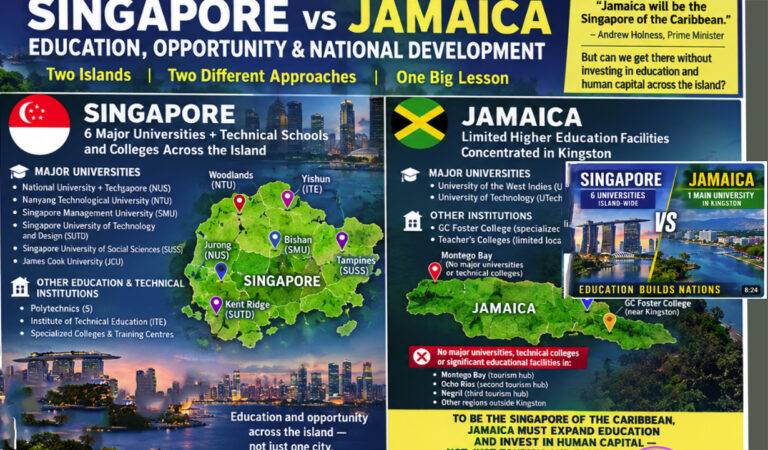
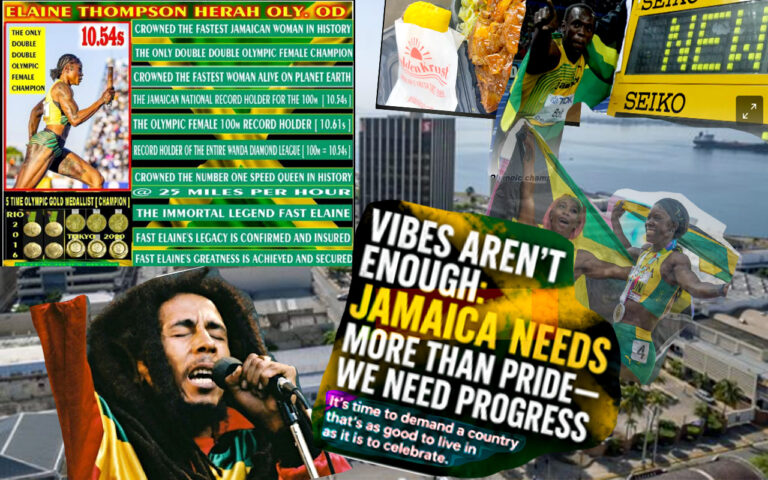


Jamaica should never be economically struggling at the level it is today, considering its global cultural influence, natural resources, and talent pool. This conversation is not about attacking tourism — it’s about questioning whether an economy centered mostly around low-wage tourism can truly build long-term national wealth.
Can Jamaica create a better balance between tourism, education, technology, manufacturing, and local ownership?
Let’s discuss respectfully