Contributed by Richard Hugh Blackford
STAR-STRUCK AND UNDERSOLD: HOW JAMAICA FAILS TO VALUE ITS OWN POWER
There is perhaps no country on earth that punches above its weight culturally quite like Jamaica. Our tiny island of 4,400 square miles with a population of under three million people has managed to shape global music, fashion, language, athletics, cuisine, dance, and popular culture in ways that far larger nations can only dream about. Jamaican influence is everywhere. It echoes through the basslines of hip-hop, pulses through reggaeton rhythms, lives inside London street-slang, dominates Olympic tracks, flavors international cuisine, and animates nightlife from New York City to Tokyo. And yet, despite this extraordinary global reach, Jamaicans still behave as though validation must come from somewhere else.
ALL ARE WELCOME TO VISIT BUT…
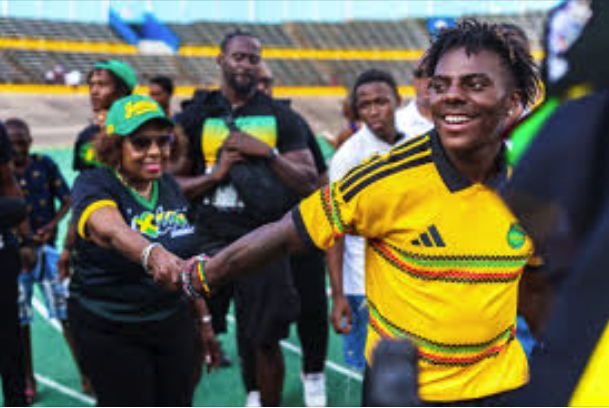
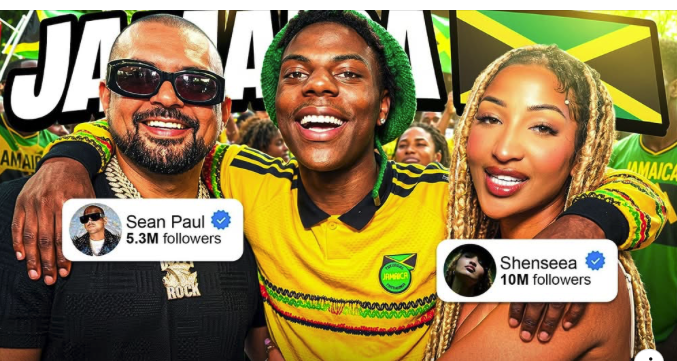
That contradiction was laid bare recently during the spectacle surrounding internet personality IShowSpeed and his visit to Jamaica. Let me be clear that my issue is not that the young man visited Jamaica. Far from it. In fact, visitors are welcome. Jamaica’s tourism industry depends heavily on global attention and engagement. Nor is the issue that he is popular. In today’s digital economy, follower counts translate into influence, visibility, and money. The issue is what Jamaicans revealed about themselves in the process.
Here was a foreign influencer climbing onto the service counter of a food establishment, jumping into a food preparation area, high-fiving workers in violation of basic food handling principles, creating disorder in a commercial environment — all while being cheered on by crowds, indulged by management.
DOUBLE STANDARDS
Imagine for one second an ordinary Jamaican attempting that same behavior inside a KFC or Tastee Patties outlet. Security would descend immediately, with a good chance that the Police might be called; and depending on the location and circumstance, the outcome could become dangerous very quickly. Such an uncomfortable reality exposes a deeper sickness within the Jamaican psyche, and that is that there are different rules for Jamaican people who believe they possess fame, foreignness, money, or perceived global importance. In my opinion, that is not hospitality. That is insecurity.
THE BRAND JAMAICA THE WORLD SEES
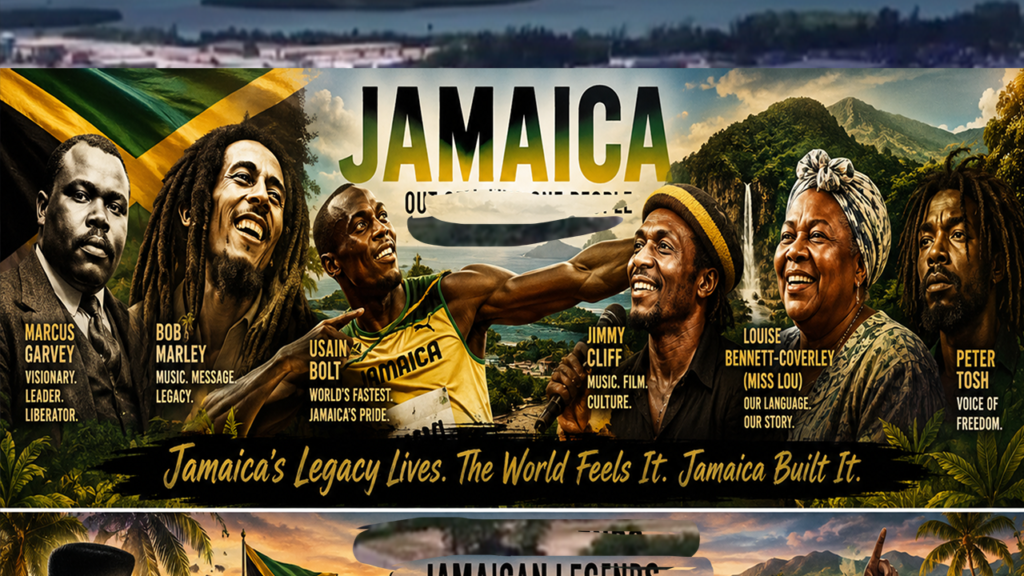
Ironically, the rest of the world already understands Jamaica’s value far better than Jamaicans themselves do. Jamaica is consistently ranked among the world’s most culturally influential nations. Its music has transformed global soundscapes while its language influences international youth culture. Its food has become a global culinary brand. Its athletes dominate world stages disproportionately to population size, and its people are viewed globally as energetic, resilient, creative, humorous, and culturally magnetic.
The Jamaican diaspora has carried the island’s cultural DNA into Britain, Canada, the United States, and Europe, reshaping language, music, style, and identity wherever Jamaicans settled. In the United Kingdom, especially, Jamaican Patois has become embedded within modern urban English to such an extent that many phrases commonly used by British youth today have direct Jamaican roots. Jamaica’s influence is therefore not accidental, but powered by a people forged through resistance, creativity, survival, improvisation, and community. The nation’s motto, “Out of Many, One People,” created a cultural fusion unmatched in global popular culture. African rhythm, European structure, Indian influence, Chinese migration, Spanish and Middle Eastern traces all collided to produce something uniquely Jamaican. And while the world bought into it, the tragedy is that Jamaicans themselves often do not.

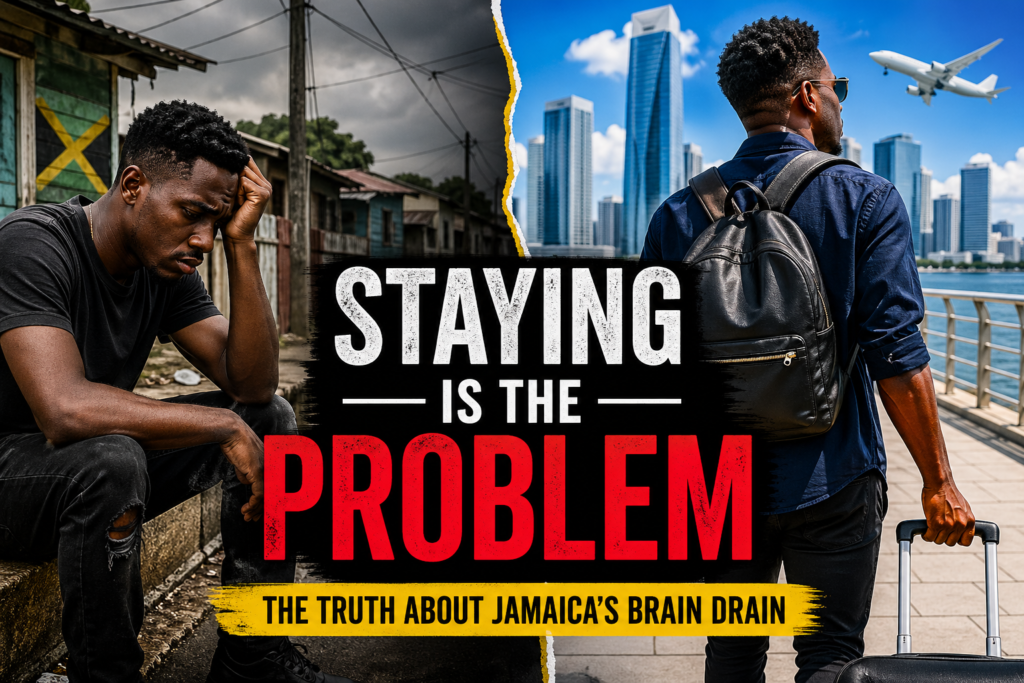

WE EXPORT CULTURE BUT IMPORT VALIDATION
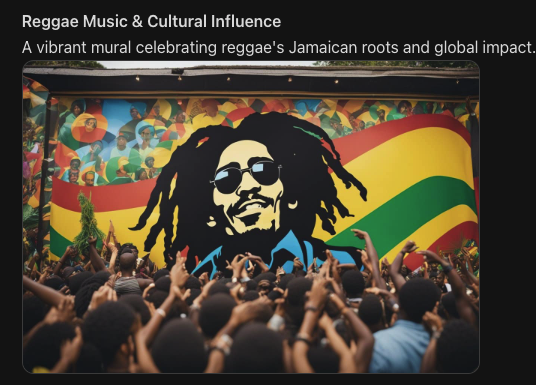
Jamaica’s core contradiction is that as a country, it exports confidence but imports approval. This is the island that gave the world Bob Marley, yet still behaves as though foreign entertainers are inherently more valuable than local cultural giants. This is the country that produced the Marley dynasty, as well as the fastest men and women in human history. Jamaica has produced three Miss World winners, global musical architects, legendary sound system culture, international dance movements, Olympic excellence, and a globally dominant diaspora culture. And yet many Jamaicans become weak at the knees because an internet celebrity arrives with cameras and millions of followers.
Why? Jamaica still struggles with colonial psychological conditioning, where too many Jamaicans still measure worth through external recognition. So, if the USA, Canada, and the UK validate something, Jamaicans embrace it. If Europe praises it, Jamaicans celebrate it; and if foreigners consume it, Jamaicans suddenly respect it. Meanwhile, local genius is often ignored until outsiders endorse it first.
This explains why many Jamaican artists, thinkers, writers, educators, and innovators frequently receive more respect overseas than at home.
THE BUSINESS FAILURE OF BRAND JAMAICA
The truly astonishing part is that Jamaica has never fully commercialized its cultural influence in a structured national way. Countries spend billions trying to manufacture the kind of soft power Jamaica possesses naturally. South Korea strategically exported K-pop and Korean culture, while Japan monetized anime, cuisine, fashion, and design. The United States turned entertainment into geopolitical power.
Jamaica already possesses a globally recognized cultural identity organically, yet the country still behaves largely like a tourism-dependent economy instead of a cultural superpower. Brand Jamaica should not merely be beaches and all-inclusive resorts.
Brand Jamaica is Music, Dance, Language, Athletics, Cuisine, Fashion, Spirituality,
Humor, Creativity, Community, Resilience. Most importantly, though, Brand Jamaica is the Jamaican people. That is the engine, not the hotels, nor the cruise ships. Not the slogans, but the people.
STAR-STRUCK CULTURE IS DANGEROUS
The danger in celebrity worship is not merely embarrassment. It weakens national self-worth. When Jamaicans excessively glorify outsiders while undervaluing their own contributors, the society sends a message to young people that foreign attention matters more than local contribution. Such a mentality creates a population that is constantly seeking external validation instead of building internal confidence. It also creates a dangerous tolerance for behavior Jamaicans themselves would never be permitted to display. Respectability and rules suddenly become negotiable when fame enters the room. It is my opinion that that is cultural surrender masquerading as excitement.
JAMAICA NEEDS TO RECOGNIZE ITS OWN VALUE
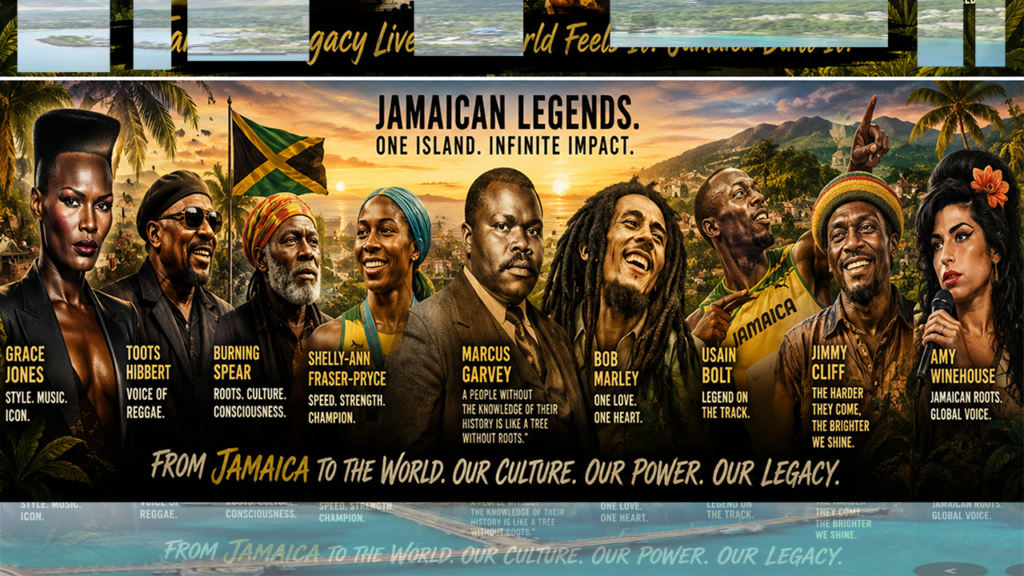
Jamaica does not need foreign influencers to make the country relevant because Jamaica was globally relevant long before social media existed. The world dances to Jamaican rhythms every single day, and the world speaks Jamaican slang unknowingly. Similarly, the world eats Jamaican food while it imitates Jamaican style. The world studies Jamaican sprinting excellence and the world profits from Jamaican creativity constantly. The real challenge now is whether Jamaicans themselves can finally understand the value of what they already possess. Because until Jamaica fully believes in Jamaica, it will continue underselling one of the most powerful cultural brands on earth.
Article contributed by: Richard Hugh Blackford

come and join me at moomoo!Sign up via my referral link now and claim 8.1% APY and up to 15 free stocks!
account when you invite 3 or more friends to sign
One Comment