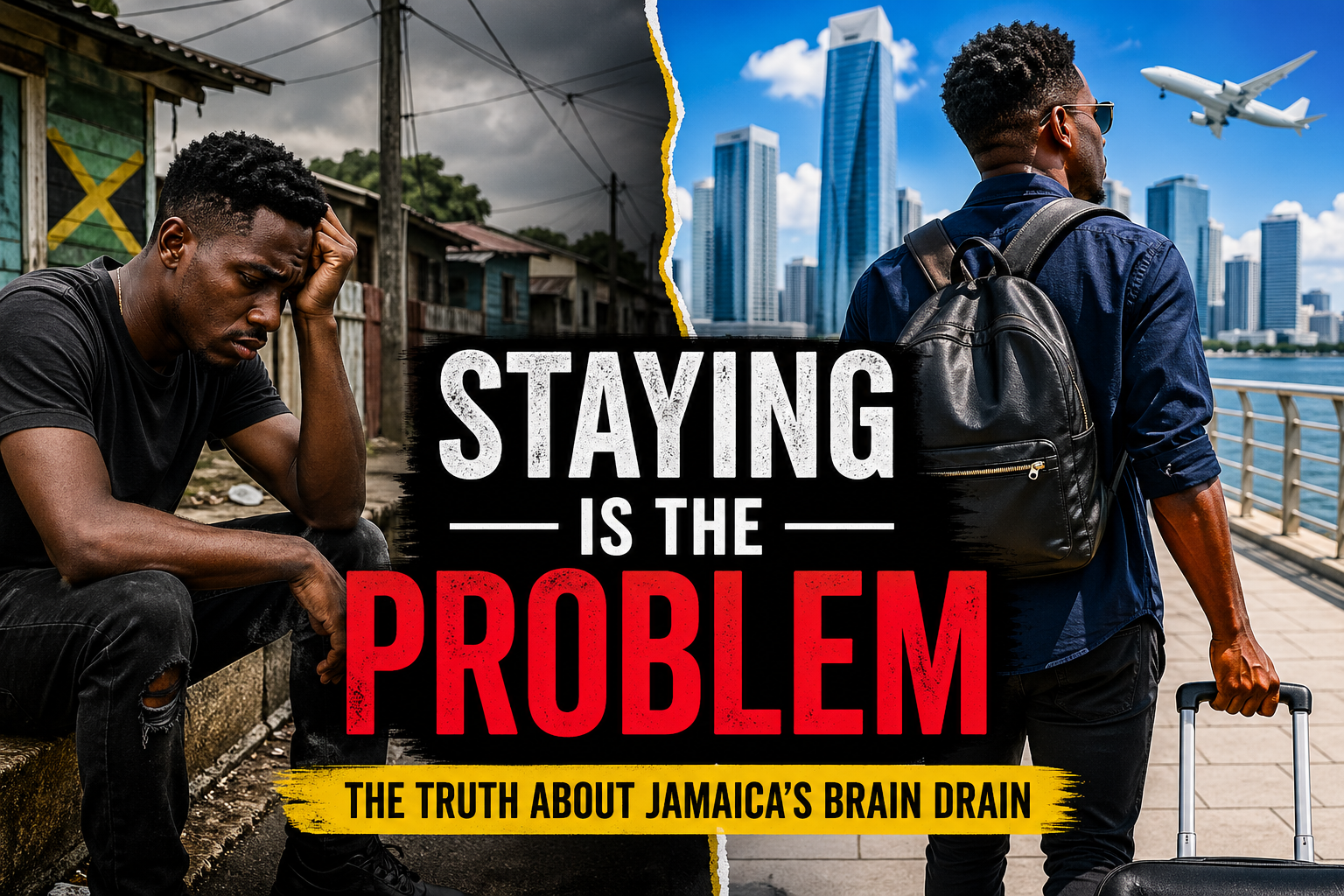
For years, the narrative has been simple: Jamaicans are leaving in search of better opportunities abroad. But that explanation only scratches the surface.
The truth is far more uncomfortable.
People are not leaving because they lack love for their country. In many cases, they are leaving because they understand its potential—and recognize that the systems in place are not designed to realize it.
At the same time, those who remain often position themselves as loyal. But staying, in itself, is not loyalty—especially when it is paired with silence, complacency, or even defense of the very systems that limit progress.
This is where the real issue lies.
Jamaica has built a global reputation for producing exceptional talent. From professionals to entrepreneurs, Jamaicans thrive worldwide. This is often celebrated as a point of pride.






But it should also be seen as a warning.
When a country consistently exports its most skilled and ambitious individuals, it weakens its own foundation. While remittances provide short-term relief, they do not replace lost productivity, innovation, or long-term economic growth.
In fact, remittances can create the illusion of stability while masking deeper structural issues.
The result is a dangerous cycle:
A country exports talent → receives money → avoids reform → continues to lose talent.
And beneath it all is an even harsher truth—opportunity is not equally distributed.
Opportunities do exist, but they are often concentrated within specific social and economic circles. For many, migration is not simply a choice; it is an escape from systemic limitations.
Blaming those who leave misses the point entirely.
The real question is:
Why does the system fail to make staying a viable and attractive option?
Real development requires more than survival. It requires intentional investment in systems that reward merit, encourage innovation, and expand access to opportunity.
Until those changes are made, migration will continue—not as a trend, but as a necessity.
And until then, the uncomfortable truth remains:
The problem is not that people are leaving.
The problem is that too many are willing to accept why they have to






come and join me at moomoo!Sign up via my referral link now and claim 8.1% APY and up to 15 free stocks!
account when you invite 3 or more friends to sign