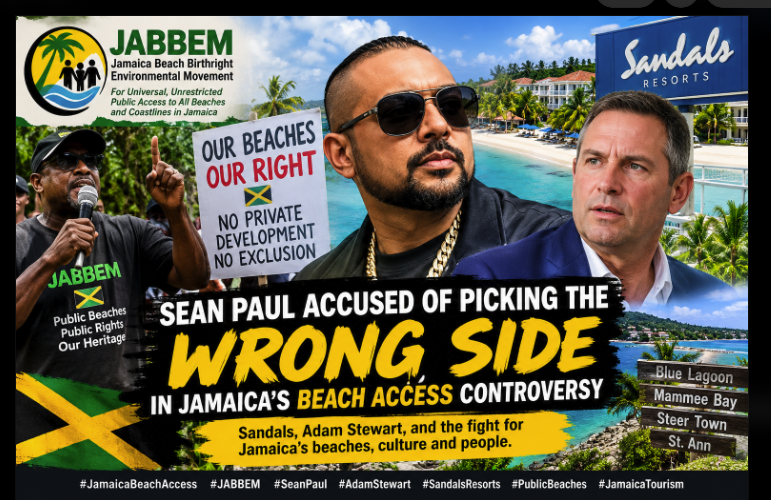
A member of the Jamaica Beach Birthright Environmental Movement JABBEM), a grassroots organization led by President Dr. Devon Taylor, has accused Jamaican dancehall artist Sean Paul, also known as “Dutty Paul,” of siding with Sandals Resorts and its president, Adam Stewart, amid growing concerns over public beach access and coastal development in Jamaica.
The criticism goes beyond music and celebrity endorsements. It touches on a much bigger national debate: Who has the right to Jamaica’s beaches, and who ultimately benefits from the island’s coastal development?
JABBEM advocates universal, unrestricted public access to Jamaica’s beaches and coastlines. The organization opposes developments that restrict public access and calls for revisions to, or repeal of, the 1956 Beach Control Act, which governs access to and use of Jamaica’s foreshore and seabed.
The JABBEM member reportedly accused Sean Paul of supporting a system driven by greed and oppression by associating himself with Sandals amid allegations of restricted beach access. The criticism specifically references coastal locations including Blue Lagoon and Mammee Bay in St. Ann, where disputes over public access have raised concerns among residents and beach-access advocates.
Mammee Bay is particularly significant to the debate because of concerns about access for residents of Steer Town, Mammee Bay, and the wider St. Ann community. Critics argue that Jamaica’s beaches should not become effectively inaccessible to ordinary Jamaicans while remaining central to the tourism industry and its commercial success. The specific circumstances and responsibility for any access restrictions, however, require verification.
Adam Stewart, the Jamaican businessman who leads Sandals Resorts International, is also at the centre of the wider discussion about tourism, employment, ownership, and economic power. Although Sandals is a major employer in the Caribbean, critics question whether Jamaican workers receive a fair share of the wealth generated by the tourism industry. Claims that employees in other Caribbean destinations are paid more than their Jamaican counterparts warrant supporting evidence and comparisons of wages, roles, and working conditions.
For the JABBEM member, Sean Paul’s association with Sandals raises a question of solidarity. As an internationally recognised artist whose career is rooted in Jamaican music, should he be more vocal about the struggles of ordinary Jamaicans seeking access to their own coastline? The accusation is that supporting a powerful tourism brand without adequately addressing these concerns risks putting commercial interests ahead of the public interest.
The member also levelled a separate cultural criticism against Sean Paul, accusing him of appropriating elements of dancehall established by artists who came before him. This allegation opens another debate about the origins of dancehall, recognition of its pioneers, and how artists benefit from a genre shaped by generations of Jamaican musicians and communities.
Ultimately, the controversy raises questions that extend beyond one artist or one resort. Jamaica’s beaches are part of the country’s natural heritage, cultural identity, and public interest. As tourism investment expands, Jamaicans deserve transparent policies, fair employment practices, and meaningful access to their coastline.
The central question remains: Can Jamaica celebrate the international success of its tourism industry while ordinary Jamaicans feel increasingly excluded from the natural resources that make the island so valuable?
This is not simply a dispute about a celebrity or a resort. It is part of a larger conversation about beach rights, public access, economic justice, and who benefits from Jamaica’s development.
Related Posts
-
Activists from JaBBEM took to…
-
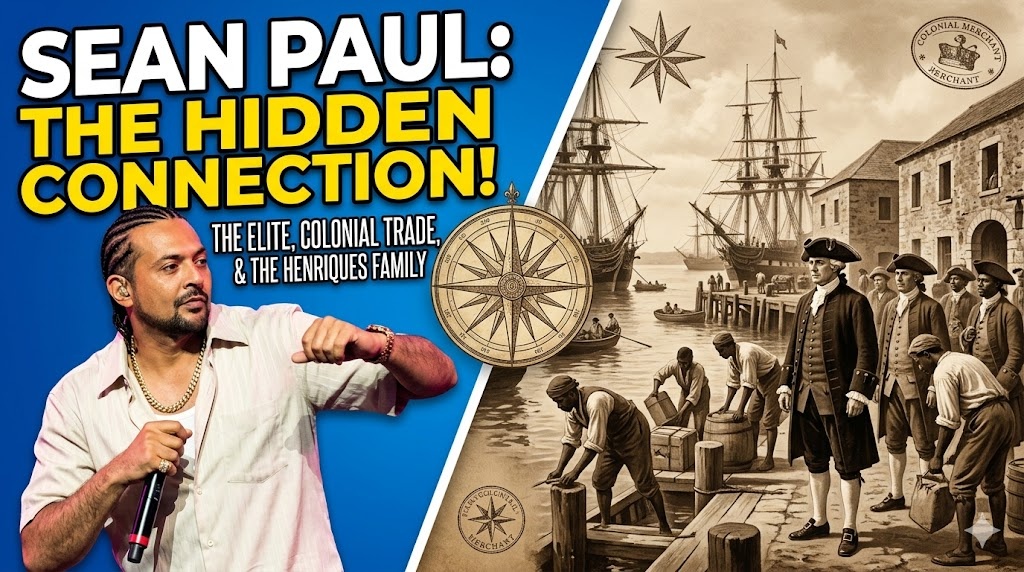
Go beyond the music to…
-
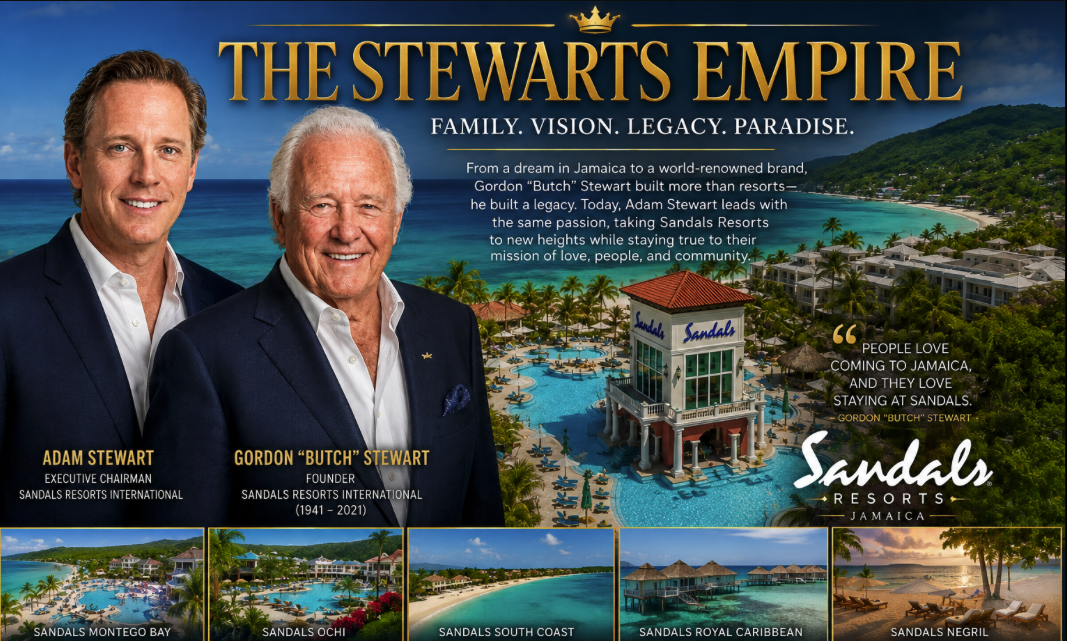
From a single resort in…
-

Is Jamaica truly independent, or…

come and join me at moomoo!Sign up via my referral link now and claim 8.1% APY and up to 15 free stocks!
account when you invite 3 or more friends to sign