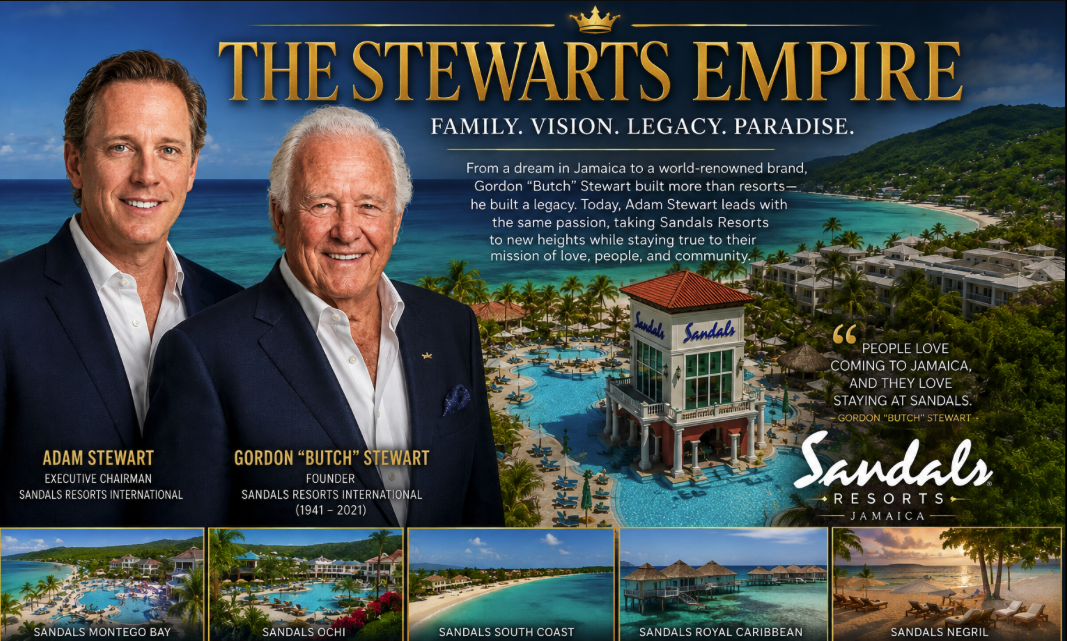
For decades, The Stewarts Empire has become synonymous with Jamaican entrepreneurship and hospitality excellence. Under the leadership of the late Gordon “Butch” Stewart, Sandals Resorts International grew from a single resort into one of the Caribbean’s most recognized luxury tourism brands. Today, Adam Stewart continues to expand that legacy on the global stage.
Yet alongside that remarkable success, an important national conversation continues to grow: Can Jamaica’s tourism success do more to transform the communities that make it possible?
Tourism Success Alone Does Not Create Unity
Jamaica often celebrates record-breaking visitor arrivals and billions of dollars in tourism earnings. However, genuine national unity cannot exist while economic inequality continues to widen.
A more pressing question is not simply how much tourism earns, but where the long-term benefits are being invested.
The debate is no longer whether tourism is important—it unquestionably is. The real issue is whether Jamaica’s tourism economy is creating sustainable prosperity for the people living in the country’s largest resort communities.


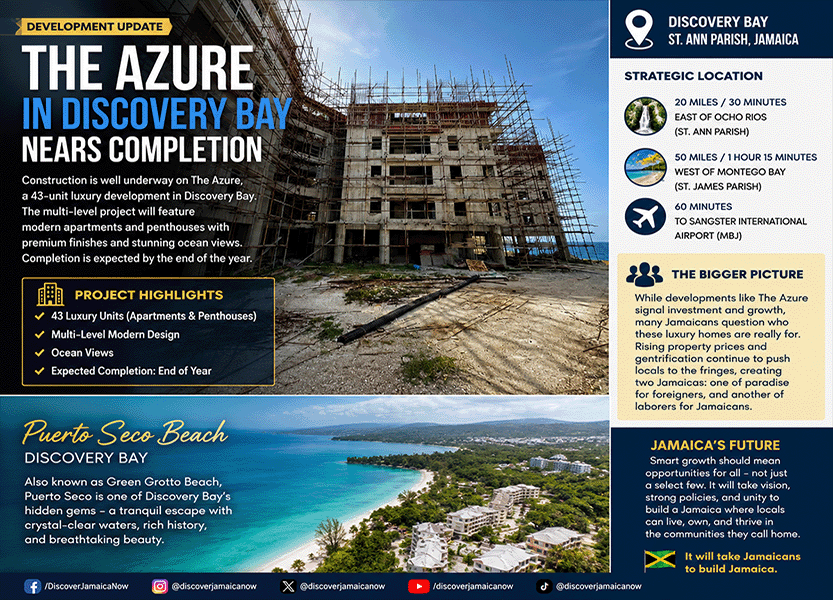
Montego Bay and Ocho Rios: Tourism Giants With Untapped Potential
Montego Bay and Ocho Rios remain the engines of Jamaica’s tourism industry, welcoming millions of visitors and generating billions of dollars in economic activity.
Despite their importance, many Jamaicans continue to ask why these tourism centers have not evolved into comprehensive hubs of education, innovation, manufacturing, and sports development.
Questions frequently raised include:
- Where are the internationally recognized universities serving western Jamaica?
- Where are the research and innovation centers connected to tourism and technology?
- Where are the advanced manufacturing facilities creating skilled careers?
- Where are the world-class sporting complexes capable of producing future Olympians while serving local communities?
These are the kinds of investments that create wealth long after tourists return home.
Beyond a Service Economy
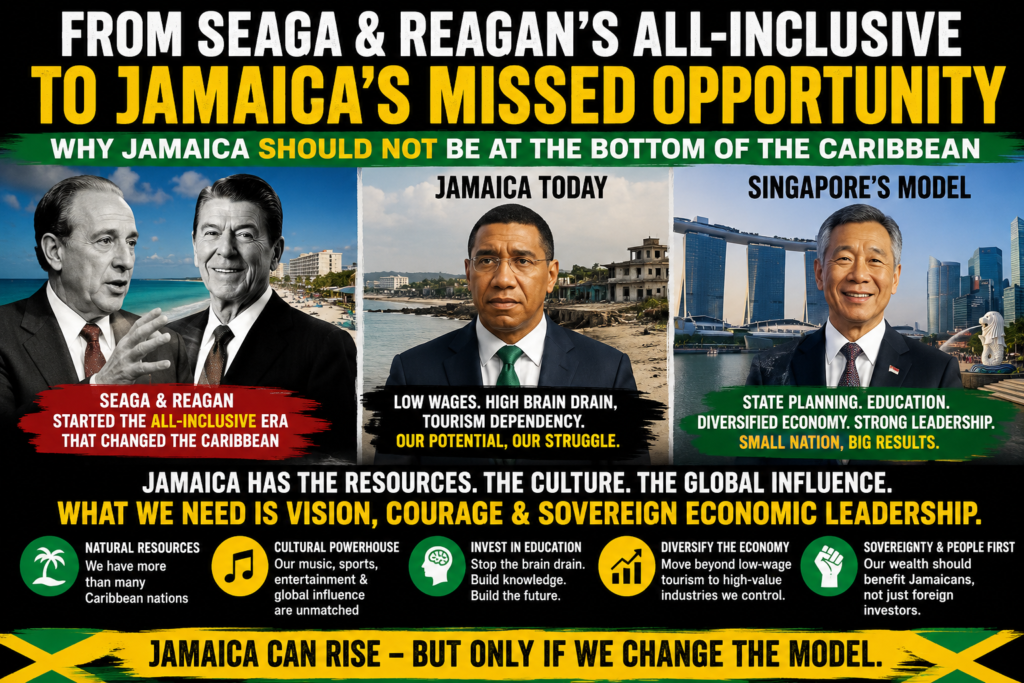
Many critics argue that Jamaica has become heavily dependent on a service-based tourism model that offers employment but comparatively fewer pathways into higher-paying professions, entrepreneurship, research, engineering, technology, or advanced manufacturing.
Some even describe the system as a modern version of the plantation economy—not because the circumstances are identical to history, but because they see a pattern in which substantial wealth is generated locally while many surrounding communities continue to face persistent economic challenges.
Whether one agrees with that characterization or not, it reflects concerns about how the gains from tourism are distributed and reinvested.
The Stewarts Empire and a New Opportunity
Among Jamaica’s largest tourism companies, Sandals Resorts International occupies a unique position.
Unlike many international hotel chains operating on the island, Sandals was founded in Jamaica and remains closely associated with Jamaican entrepreneurship. The achievements of Gordon “Butch” Stewart and the leadership of Adam Stewart represent one of the country’s greatest business success stories.
That success also places the company in a unique position to inspire broader conversations about long-term national development.
Imagine partnerships involving Sandals, government, universities, investors, and private industry to establish:
- Major universities specializing in hospitality, medicine, engineering, and technology.
- Technical institutes preparing Jamaicans for high-skilled careers.
- Research and innovation centers supporting Caribbean entrepreneurship.
- Modern sports academies and Olympic-caliber training facilities.
- Business incubators are encouraging local manufacturing and exports.
Such investments could strengthen Jamaica’s workforce while creating opportunities that extend well beyond tourism.
Building a More Diversified Economy
Tourism will almost certainly remain one of Jamaica’s most important industries.
However, the country’s long-term resilience may depend on expanding opportunities into sectors such as technology, logistics, renewable energy, agriculture, manufacturing, education, healthcare, and innovation.
Communities that generate billions in tourism revenue should also become centers of knowledge, enterprise, and economic mobility—not solely destinations where visitors vacation.
Looking Ahead
The Stewarts Empire stands as one of Jamaica’s greatest entrepreneurial achievements. The legacy of Gordon “Butch” Stewart and the continued leadership of Adam Stewart have helped place Jamaica on the global tourism map.
The next chapter of that legacy could involve an even broader vision—one where tourism not only attracts visitors but also helps cultivate world-class universities, thriving industries, stronger communities, and greater economic opportunity for future generations.
As Jamaica looks ahead, the conversation is no longer simply about building more resorts. It is about building a more diversified economy where lasting investments match the prosperity created by tourism, including education, innovation, infrastructure, and opportunities for all.



come and join me at moomoo!Sign up via my referral link now and claim 8.1% APY and up to 15 free stocks!
account when you invite 3 or more friends to sign