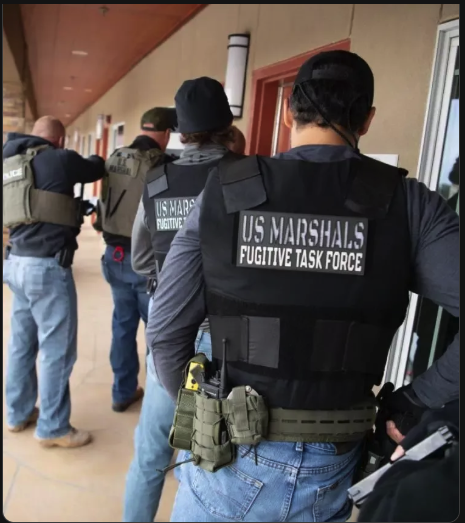
FBI Most Wanted Fraudster Elaine Angene Escoe Captured in Jamaica After $32 Million COVID Relief Scam
Elaine Angene Escoe, a 41-year-old fugitive who landed on the FBI’s Most Wanted Fraudsters list, has been apprehended in Jamaica and extradited to South Florida to face federal prosecution. Authorities allege she masterminded a sprawling pandemic relief fraud ring that siphoned over $32 million from taxpayer-funded COVID-19 assistance programs—using a fake identity to evade capture for months before an FBI tip led to her arrest.
The Arrest: From FBI’s Most Wanted to a Jamaican Jail Cell
After months on the run, Elaine Angene Escoe’s time as a fugitive has come to an end. The 41-year-old, who once graced the FBI’s Most Wanted Fraudsters list, was captured in her native Jamaica and returned to South Florida to face a federal judge. Her arrest marks the culmination of an international manhunt that began after she vanished from the United States in mid-2025.
Escoe wasn’t just another name on a list—prosecutors paint her as the architect of a sophisticated fraud ring that exploited emergency pandemic relief programs at a time when millions of Americans were struggling to survive.
Breaking Down the Charges
Escoe faces a trifecta of serious federal charges that could land her behind bars for decades:
Table
| Charge | What It Means |
|---|---|
| Wire Fraud | Using electronic communications (email, online applications, bank transfers) to carry out fraudulent schemes |
| Conspiracy to Commit Wire Fraud | Collaborating with others to plan and execute the fraudulent scheme |
| Money Laundering | Concealing the origins of illegally obtained money—typically by moving it through legitimate-looking transactions or accounts |
Each charge carries significant federal prison time, and when stacked together, Escoe could be facing a sentence that stretches well into double digits.
The Scheme: How the $32 Million Fraud Ring Operated
According to federal prosecutors, Escoe didn’t act alone. She allegedly helped orchestrate a fraud ring that systematically targeted COVID-19 relief programs designed to keep American businesses afloat during the pandemic.
Here’s how the scheme allegedly worked:
- Over 90 fake applications were submitted to programs like the Paycheck Protection Program (PPP) and other federal COVID-19 relief initiatives
- The fraudulent applications successfully secured more than $32 million in taxpayer funds
- The money was intended for struggling businesses and workers—but instead allegedly lined the pockets of Escoe and her co-conspirators
The Paycheck Protection Program was a lifeline for millions of small businesses during the height of the pandemic. Created under the CARES Act, it offered forgivable loans to companies that kept employees on payroll. But it also became a magnet for fraudsters who saw an opportunity to exploit the rushed rollout and overwhelmed oversight systems.
Escoe’s alleged operation wasn’t a one-off mistake—it was a systematic, large-scale criminal enterprise that required coordination, forged documents, and careful planning.
The Manhunt: From South Florida to Jamaica
Escoe’s downfall began when a federal arrest warrant was issued against her. Rather than face justice, she chose to run.
- Mid-2025: Escoe fled the United States
- Her hideout: She returned to her native Jamaica, where she attempted to blend in using the fake identity “Harley Newman”
- The tip: Local Jamaican authorities acted on an FBI tip, leading to her capture
- Extradition: She was returned to South Florida to face federal charges
The fact that Escoe adopted an alias suggests she intended to build a new life abroad, hoping the distance and false identity would keep her off law enforcement’s radar. But the long arm of federal justice—and international cooperation between the FBI and Jamaican authorities—proved too much to escape.
What Happens Next?
Now back in South Florida, Escoe will face the full weight of the federal justice system. Her case is expected to proceed through the U.S. District Court, where prosecutors will present evidence of the alleged fraud ring, the fake applications, and the money trail.
If convicted on all counts, Escoe could face:
- Substantial federal prison time (potentially 10–30+ years depending on sentencing guidelines and restitution)
- Massive financial restitution to repay the stolen funds
- Forfeiture of assets purchased with the proceeds of the fraud
Her arrest also sends a clear message: federal authorities are still aggressively pursuing pandemic relief fraud cases, even years after the programs ended. The Department of Justice has made COVID-19 fraud prosecution a priority, and Escoe’s case is one of the largest to date.
The Bigger Picture: Pandemic Fraud Is Still Being Uncovered

Escoe’s arrest is part of a much larger story. The U.S. government distributed trillions of dollars in pandemic aid in record time—and with that speed came vulnerability. Estimates suggest that billions of dollars in COVID-19 relief funds were stolen through fraudulent schemes.
The DOJ, FBI, and other federal agencies have formed dedicated task forces to track down fraudsters, recover stolen funds, and prosecute those responsible. Escoe’s case stands out not just for the dollar amount but for the brazenness of the alleged scheme and her attempt to flee the country to avoid consequences.
Final Thoughts
Elaine Angene Escoe went from an alleged $32 million fraud mastermind to an FBI Most Wanted fugitive to a captured suspect facing federal charges. Her story is a cautionary tale about the reach of federal law enforcement and the consequences of exploiting programs meant to help people in crisis.
As her case moves through the courts, one thing is clear: justice may be slow, but for those who try to outrun it, the finish line is inevitable.





come and join me at moomoo!Sign up via my referral link now and claim 8.1% APY and up to 15 free stocks!
account when you invite 3 or more friends to sign