Buju Banton and Lucky dude

He stressed the fact that Afrobeat artist has not given reggae or dancehall its just due

Reggae artiste Buju Banton

He mentioned that Kenya is suffering, with young men in revolt. He spoke about South Africa, Sudan, and South Sudan. But he asks, “Which of these songs can I relate to for peace of mind, to remind me that I’m in a struggle, but we will overcome it? Even though the struggle is hard, we’re going to get through it. Tell me.” But when we look at the current music, it does not free Africa from its struggles. It’s a far cry from what it used to be. There used to be great musicians from Africa, like Fela Kuti from Nigeria, Lucky Dube from South Africa, and Salif Keita from Mali. There were also Youssou N’Dour and Baaba Maal.

These musicians didn’t shy away from addressing the pain and struggles of Africa. They were true Pan-Africanists who spoke about the oppression that African people were facing. Lucky Dube sang about apartheid, while Fela Kuti was known for his fierce opposition to the Nigerian government, criticizing politicians at every chance. He sang many songs about the bad governance in Nigeria and how Nigerians were being marginalized by their own leaders. Salif Keita also sang about military rule in Mali and expressed his dissatisfaction with the leadership at the time.

African music is not reflecting exactly what’s going on on the ground in Africa. He says African music today is all about, in his words,” fakri “. Buju Banton finishes by saying, you are popular, you will make all the money. But once you are done, you are no longer as big as you are today. what will people remember you for? All these big artists, all the Davidos of the day, all the Platinums of the day, all the Burna Boys of the day, when you are done and gone, what will people remember you for? And for this, I say Bravo
Spread the love

Similar Posts

  • FBI Most Wanted Fraudster Elaine Angene Escoe Captured in Jamaica After $32 Million COVID Relief Scam

    Elaine Angene Escoe, a 41-year-old fugitive who landed on the FBI’s Most Wanted Fraudsters list, has been apprehended in Jamaica and extradited back to South Florida to face federal prosecution. Authorities allege she masterminded a sprawling pandemic relief fraud ring that siphoned over $32 million from taxpayer-funded COVID-19 assistance programs—using a fake identity to evade capture for months before an FBI tip led to her arrest.

    Spread the love
  • Stephen “Franno” Francis Legacy: The Coach Who Built Jamaica’s Sprint Dynasty

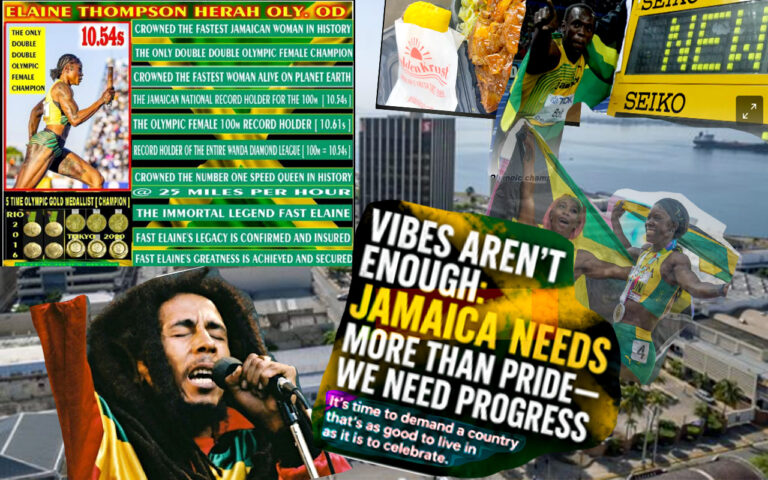
    Stephen “Franno” Francis changed the course of Jamaican athletics forever. As founder of MVP Track Club, he proved world-class sprinters could be developed at home, guiding stars like Asafa Powell, Shelly-Ann Fraser-Pryce, Elaine Thompson-Herah, Melaine Walker, Michael Frater, and Nesta Carter to international success. His legacy will continue to inspire generations of athletes around the world.

    Spread the love
  • Geopolitical Strong-Arming or Backroom Greed? The Dark Underbelly of Jamaica’s Deportee Deal

    Was Jamaica bullied into submission by Washington’s financial leverage, or did a cash-strapped government willingly trade its moral compass for economic favor? As details emerge of a controversial US migration pact, critics demand to know whether the Holness administration is the victim of geopolitical coercion, or a willing participant in a lucrative, ethically bankrupt compromise.

    Spread the love
  • The Psychology of the Modern Slave: How Tribal Loyalty is Ruining Jamaica

    Is Jamaica truly independent, or have our political parties simply stepped into the shoes of our former colonial masters? While the masses battle over political colors, a tiny elite controls the country’s actual wealth, and our leaders prioritize foreign agendas and tourism over the survival of everyday citizens. It’s time to break down the illusion of choice between the JLP and PNP and address the harsh reality of modern economic disenfranchisement in Jamaica.”

    Spread the love
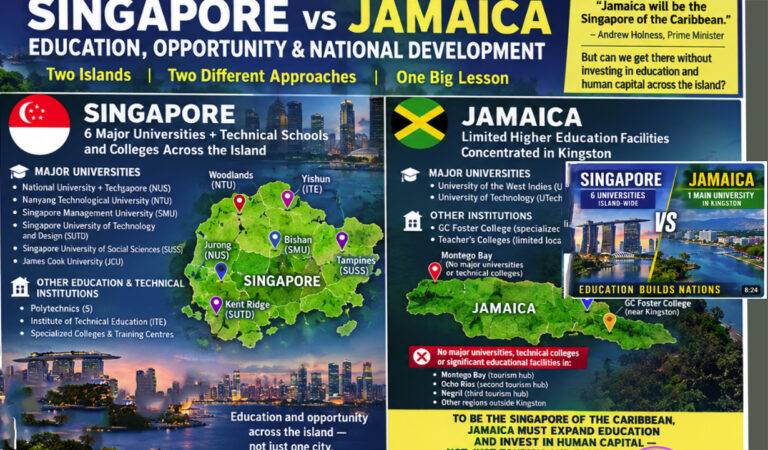
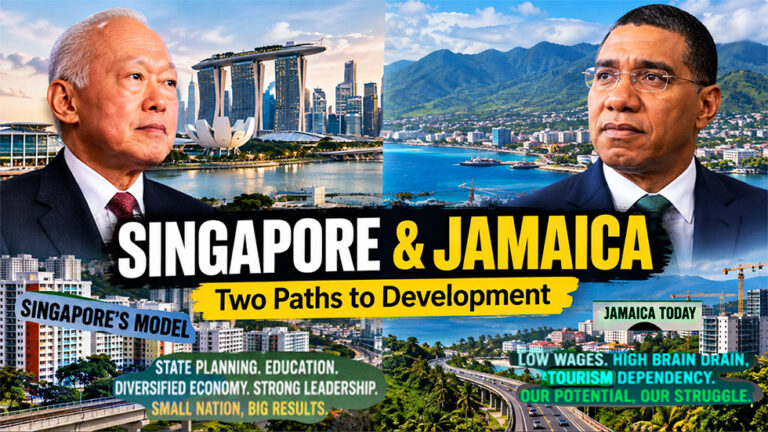
  • Why Jamaica’s Tourism Model Is Failing: How Singapore Built Wealth While Jamaica Exported Its Talent

    Jamaica has the culture, natural resources, global influence, and strategic location to be one of the strongest economies in the Caribbean. Yet decades of dependence on low-wage tourism and foreign-controlled development have produced rising brain drain, stagnant wages, and limited economic mobility. While countries like Singapore invested heavily in education, industrial policy, and diversified economic growth, Jamaica doubled down on an all-inclusive tourism model that often leaves local communities disconnected from real wealth creation. This article examines how policy choices, foreign dependency, and economic structure helped shape modern Jamaica—and why many believe the country must rethink its development model to unlock its true potential.

    Spread the love

One Comment

  1. When was the last time we heard some positive reggae or dancehall music? Throwing stones when you are living in a glass house. If you are going to be critical, you must also be critical of your genre. you cannot be a hypocrite like that

Leave a Reply

This site uses Akismet to reduce spam. Learn how your comment data is processed.