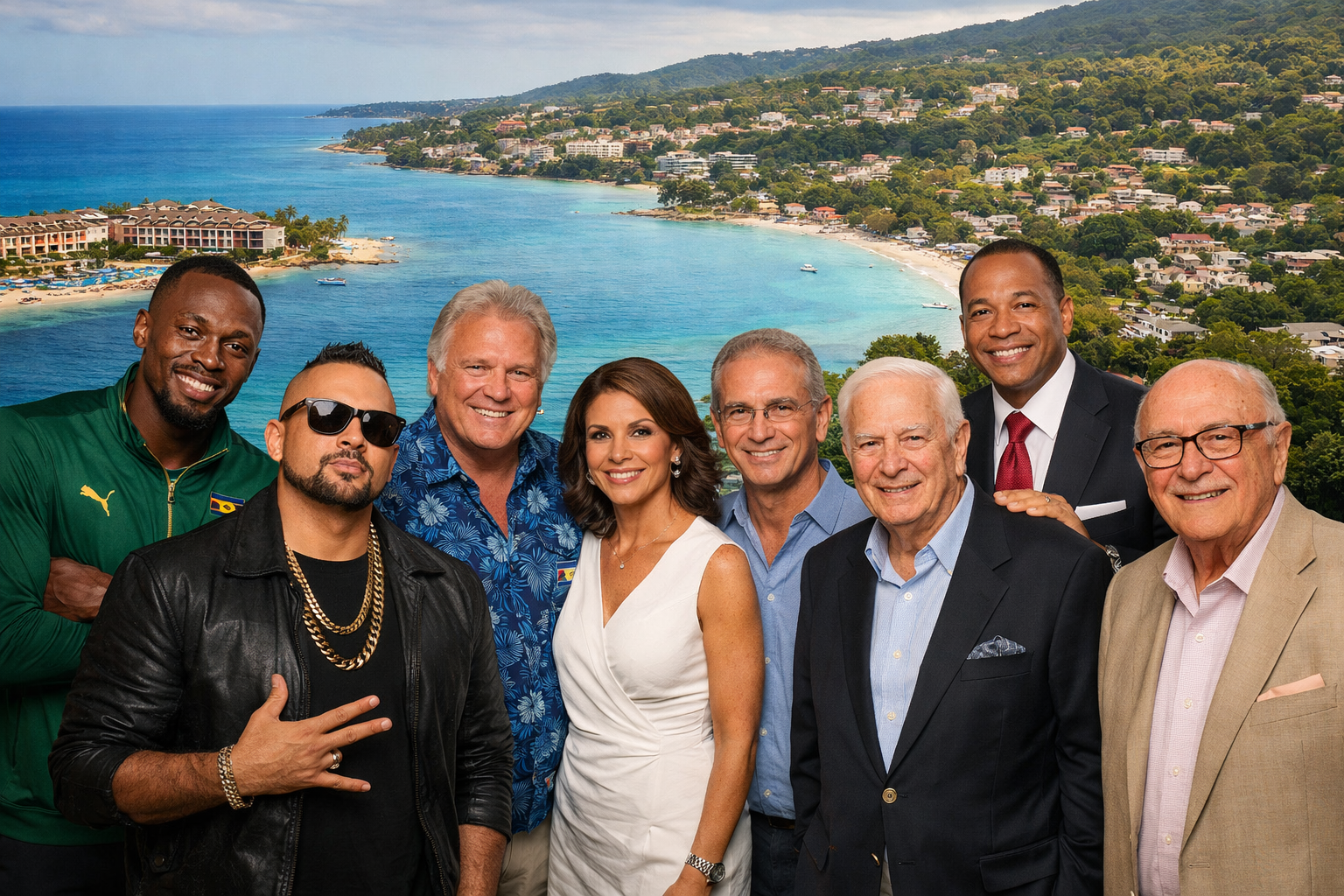
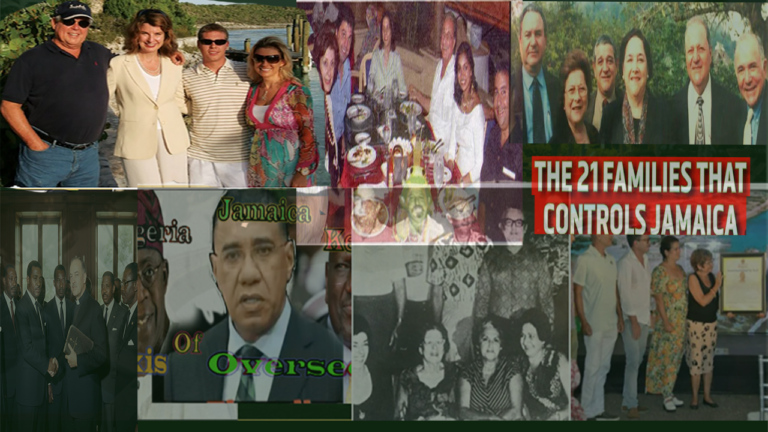
Jamaica is globally recognized as a Black country, defined by African heritage, culture, and population. Yet when wealth, corporate ownership, and economic power are examined closely, a striking imbalance emerges. Despite Black Jamaicans forming the overwhelming majority, much of the nation’s wealth historically resides within a small number of families rooted in European, Middle Eastern, and mixed-heritage lineages.

Key Revision – Black Wealth, Class, and Lineage
It is often assumed that Black wealth in Jamaica emerges only from “rags-to-riches” stories — especially in music and sports. While that narrative applies to some individuals, it does not apply universally.
A notable example is Sean Paul.
While Sean Paul is unquestionably one of Jamaica’s most successful dancehall artists, he did not come from a poor or working-class background. He is related to the Henríquez family, one of Jamaica’s wealthiest and most influential families, with roots tracing back to Portugal and Spain. The Henríquez family has long been embedded in Jamaica’s upper economic and social strata.
This distinction matters — not to discredit Sean Paul’s talent or work ethic — but to highlight how class background, family networks, and inherited access often play a decisive role in who gets opportunities, visibility, and long-term financial stability.
In other words, not all Black success stories begin at the same starting line.
Expanded Context: Wealth Is Not Just About Talent
Many of Jamaica’s wealthiest families — including the Issas, Henríquez, Henriques, Matalons, Harts, and Stewarts (Sandals Resorts) — benefited historically from:
- Early access to capital
- Land ownership during or shortly after colonial rule
- International trade and banking connections
- Racial and color hierarchies that favored lighter-skinned or non-Black elites
Even after independence, these advantages compounded across generations.
By contrast, the majority of Black Jamaicans — descendants of enslaved Africans — entered independence without land, capital, or institutional leverage, making wealth accumulation far more difficult.
Why Jamaica Is Still Seen as a Black Country
Jamaica is considered a Black country because:
- Black Jamaicans dominate the population numbers
- Black culture defines music, language, religion, and global image
- Black labor historically built the nation’s wealth
But ownership and control have often remained elsewhere.
This explains the paradox:
Black in culture and demographics — but not proportionately Black in wealth and power.


Hashtags (Updated)
#Jamaica
#WealthInequality. #WealthInequality #SeanPaul #HenriquezFamily #BlackHistory. #BlackHistory #CaribbeanEconomics
#SeanPaul
#HenriquezFamily
#BlackHistory
#CaribbeanEconomics
#ColonialLegacy.
#CaribbeanEconomics #ColonialLegacy
#BlackHistory, #ClassAndPower #Jamaica #Jamaicaeconmics
#ClassAndPower
Why Jamaica Is Still Seen as a Black Country?
#WealthInequality #SeanPaul #HenriquezFamily #BlackHistory. #BlackHistory #CaribbeanEconomics
#ClassAndPower #Jamaica #JamaicanEconomics
#Jamaica #ColonialLegacy