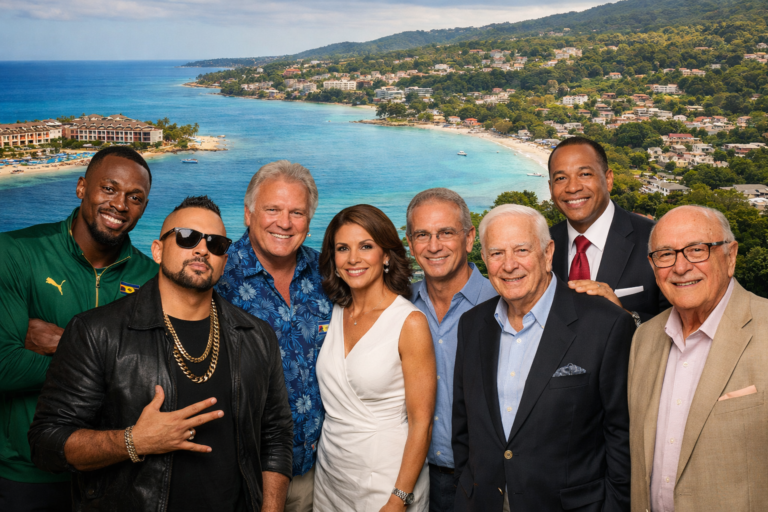
Prime minister of Jamaica , financial minister Clarke, Kenya, Nigeria and Ghana leaders

Dr. Carter G. Woodson’s The Mis-Education of the Negro (1933) argued that Black education in America trained students to uphold oppression, not overcome it. Dr. Goodwin Woodsun’s famous quote—“Harvard destroyed more minds than whiskey!”—captures the danger: elite institutions often mold thinkers who serve power, not liberation.

Dr Carter Woodson
Dr Carter Woodson

This applies far beyond the U.S. Jamaica, the Caribbean, and Africa continue sending top talent to Harvard, Oxford, and Cambridge, only to watch them return as enforcers of the same systems that exploit their homelands. Jamaica’s Finance Minister Nigel Clarke (Oxford) is joining the IMF—an organization infamous for crushing post-colonial economies. Meanwhile, Prime Minister Andrew Holness studies U.S. gun laws abroad while Jamaica burns.

Black America faces a parallel crisis: generations taught to chase prestige at institutions that erase their history and condition them to accept inequality. True empowerment requires education rooted in our communities, not borrowed from our oppressors. Jamaica, the Caribbean, Africa, and Black America must build their own centers of excellence—schools that cultivate leaders who serve their people, not global elites. Until then, the cycle continues: Harvard’s destruction outlasts whiskey’s.

Jamaica’s Grand Slam Track Future Uncertain Despite Stellar Performances

Jamaica’s future in the Grand Slam Track Series remains uncertain despite world-leading performances from stars like Salwa Eid Naser (48.67s 400m) and Alison dos Santos (47.61s 400mH). While the Kingston meet delivered elite competition, poor attendance due to high ticket prices (US$60/day) and scheduling conflicts has put its hosting status in doubt. Commissioner Michael Johnson praised the event’s execution but remained non-committal about a return
Read More Jamaica’s Grand Slam Track Future Uncertain Despite Stellar Performances
Spread the love

Similar Posts

  • Why Jamaica Is Seen as a Black Nation — Yet Wealth and Power Often Tell a Different Story

    Jamaica is globally recognized as a Black country, defined by African heritage, culture, and population. Yet when wealth, corporate ownership, and economic power are examined closely, a striking imbalance emerges. Despite Black Jamaicans forming the overwhelming majority, much of the nation’s wealth historically resides within a small number of families rooted in European, Middle Eastern, and mixed-heritage lineages.

    Spread the love
  • Montego Bay Ascendant: Swallowtail Tower Tops Out, Cementing City’s Role as Jamaica’s New Development Leader

    Montego Bay, long established as the Caribbean’s premier tourism capital, is now boldly stepping forward to claim its title as a leader in integrated, high-end residential development. The city’s skyline has been irreversibly changed with the Official Topping-Out Ceremony of the Swallowtail Tower, the first of the four luxury residential towers at The Pinnacle. Reaching its final height of 28 stories, the tower now stands as the tallest building in Jamaica. Notably, even during its construction, the structure and its installed systems demonstrated absolute resilience against the fury of Hurricane Melissa, standing tall and virtually unscathed against the Category 5 winds. This monumental achievement not only solidifies Montego Bay’s structural progress but also signals its intent to become a primary hub for luxury living and diversified economic activity, challenging Kingston’s traditional dominance in non-tourism-centric development.

    Spread the love