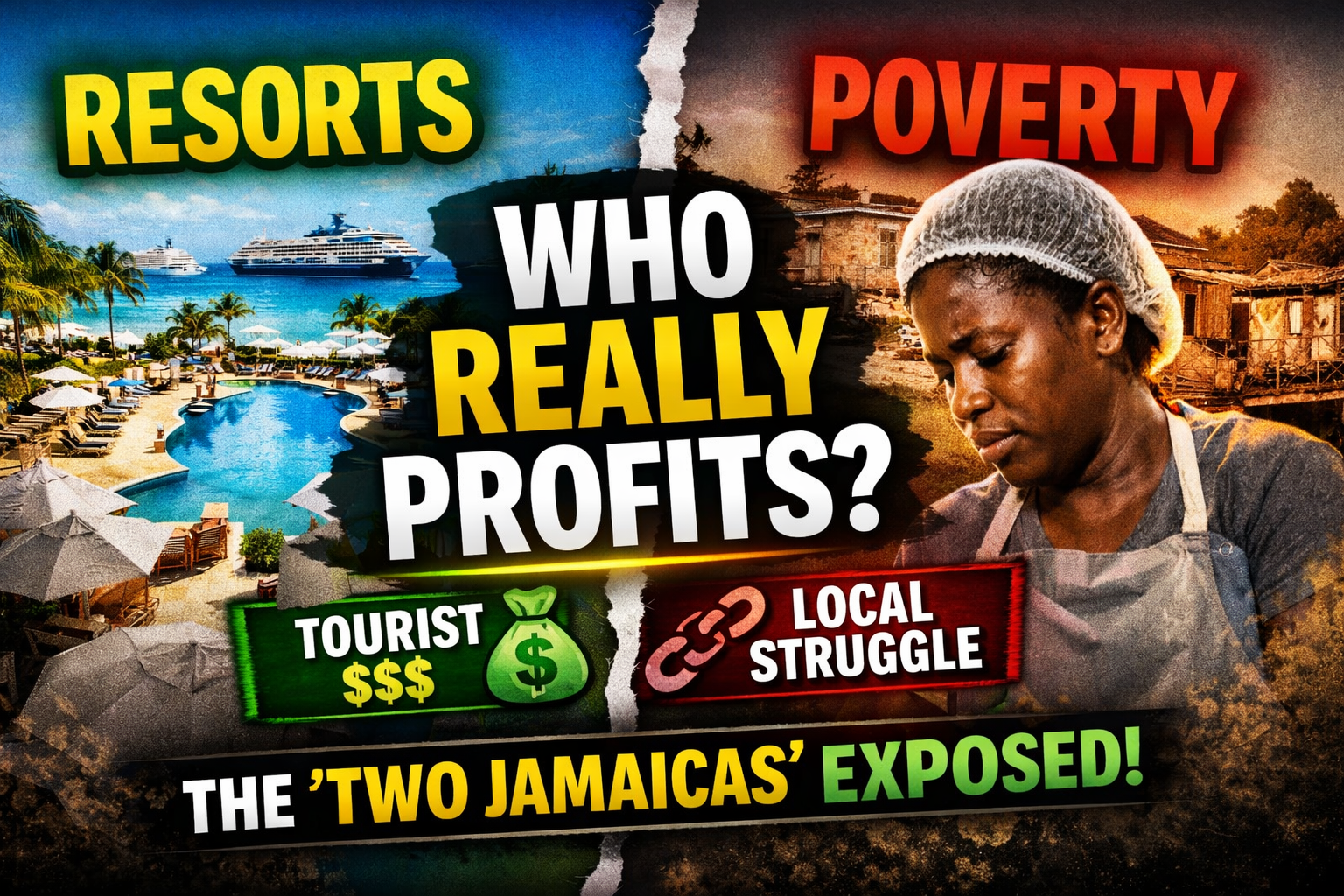
This is not an attack—it’s a necessary conversation.
Jamaica’s tourism industry is thriving, especially across Montego Bay and the greater Ocho Rios hub, the island’s second major tourism belt. These areas generate enormous wealth and attract millions of visitors each year. But beneath the surface lies a difficult question: who is truly benefiting?
This piece is not meant to discredit Jamaica’s success. It’s meant to confront a reality that too many avoid—one that affects the majority of Jamaicans, particularly the descendants of enslaved people who remain economically disenfranchised.
We expose the widening gap between resort profits and real community progress.
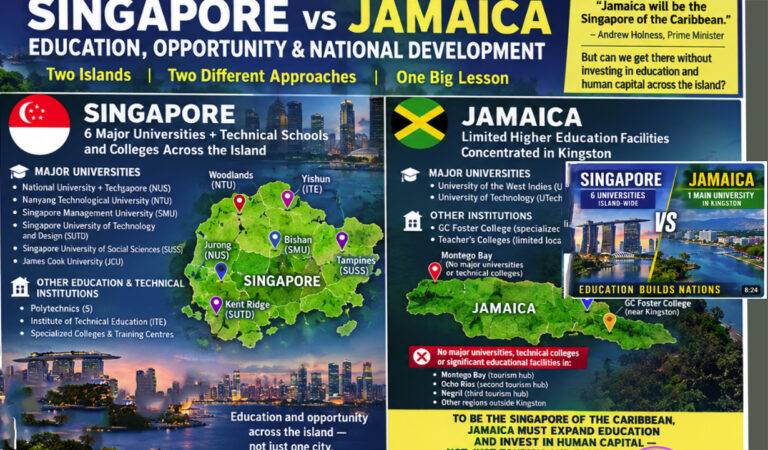
Despite the concentration of wealth flowing through these tourism zones, there is a glaring absence of major independent universities or institutions of higher learning in the heart of these regions. Instead of building pathways to ownership, innovation, and upward mobility, what we often see is a system built around “corporate training.”

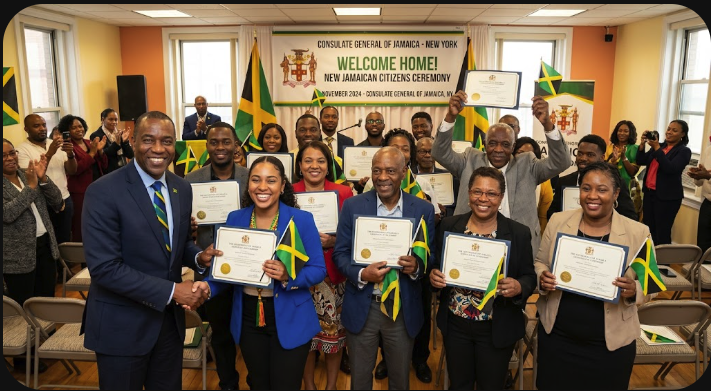


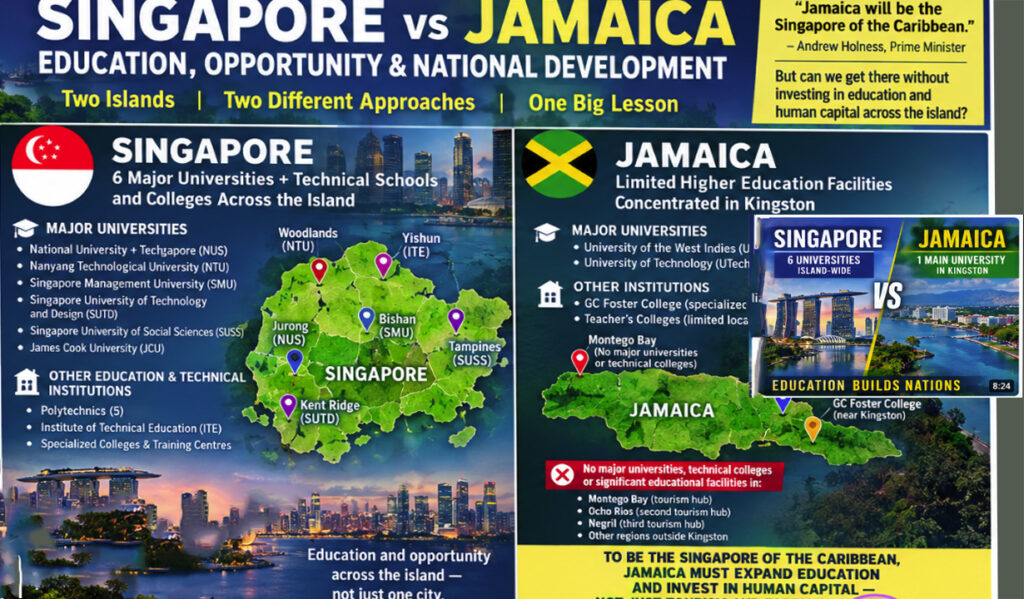
This model prepares locals primarily for service roles within the tourism industry—hospitality, customer service, and low-to-mid level operations. While these jobs are important, they rarely lead to generational wealth or economic independence. In many ways, this system reinforces a cycle where locals serve, while ownership and control remain in the hands of a small elite class.
It raises an uncomfortable but necessary question:
Why are we training a workforce to sustain an industry, but not educating a population to own it?
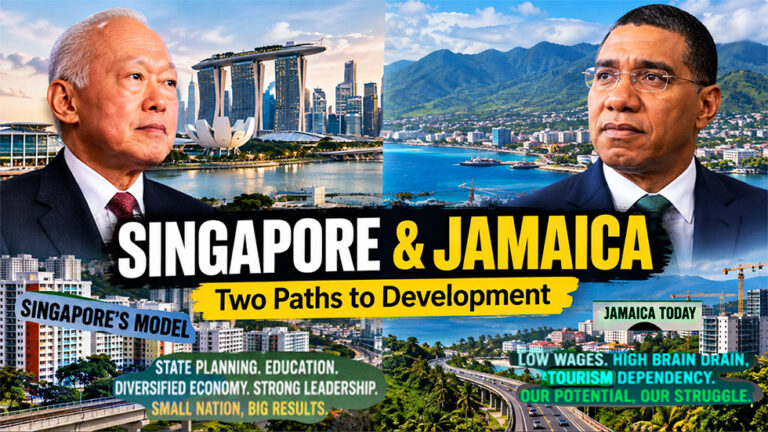
The result is what many describe as “Two Jamaicas”—one that thrives on global tourism revenue, and another that struggles with limited access to opportunity, capital, and upward mobility.
This isn’t about tearing down tourism. It’s about expanding its impact.
If the North Coast is the economic engine of Jamaica, then it should also be a hub for education, innovation, and empowerment. The absence of independent universities and research institutions in these areas represents a missed opportunity to transform communities from service-based economies into centers of ownership and leadership.
The goal is not division—it’s balance. Not criticism—but correction.
Because until the communities that power Jamaica’s tourism industry are fully included in its wealth, the system will continue to reflect deep historical inequalities rooted in the island’s past.
👉 Read the full breakdown here:
https://phillyyardyvibes.com/beyond-independence-how-the-two-jamaicas-system-perpetuates-economic-dependency-and-racial-hierarchy/

come and join me at moomoo!Sign up via my referral link now and claim 8.1% APY and up to 15 free stocks!
account when you invite 3 or more friends to sign
One Comment